10 Best Oil Storage Tank Manufacturers for Global Buyers?
Choosing an Oil Storage Tank Manufacturer is not a simple price comparison. It is a risk decision involving steel quality, welding control, corrosion protection, inspection access, and long-term maintenance.
The IEA Oil 2024 report forecasts global oil demand will reach approximately 105.4 million barrels per day by 2030. That growth keeps storage capacity strategically important, even as energy systems change. The U.S. Energy Information Administration also reports that liquid fuels will remain significant in global energy use for decades. More volume means more responsibility.
Fatih Birol, Executive Director of the International Energy Agency, stated, “The world is entering an energy crisis of unprecedented depth and complexity.” His observation applies to storage planning. A tank may look like a large steel shell, but small design choices can create major operational consequences. Consider floating-roof seals, foundation settlement, vapor control, and drainage around the bund wall.
API 650 supports welded storage tank design, while API 653 guides inspection and repair practices. Reliable manufacturers should explain how these standards shape fabrication, testing, documentation, and site installation. Certifications alone are not enough.
This guide reviews ten leading manufacturers for global buyers. It considers engineering capability, production scale, material traceability, export experience, customization, and after-sales support. Rankings can change.
They are not permanent.
A low quotation may conceal thinner inspection coverage or expensive future repairs. Buyers should also verify local climate conditions, fire-safety requirements, product compatibility, and independent inspection arrangements. No manufacturer is perfect. The strongest choice is usually the supplier that communicates limitations clearly, documents every critical step, and supports the tank after delivery.
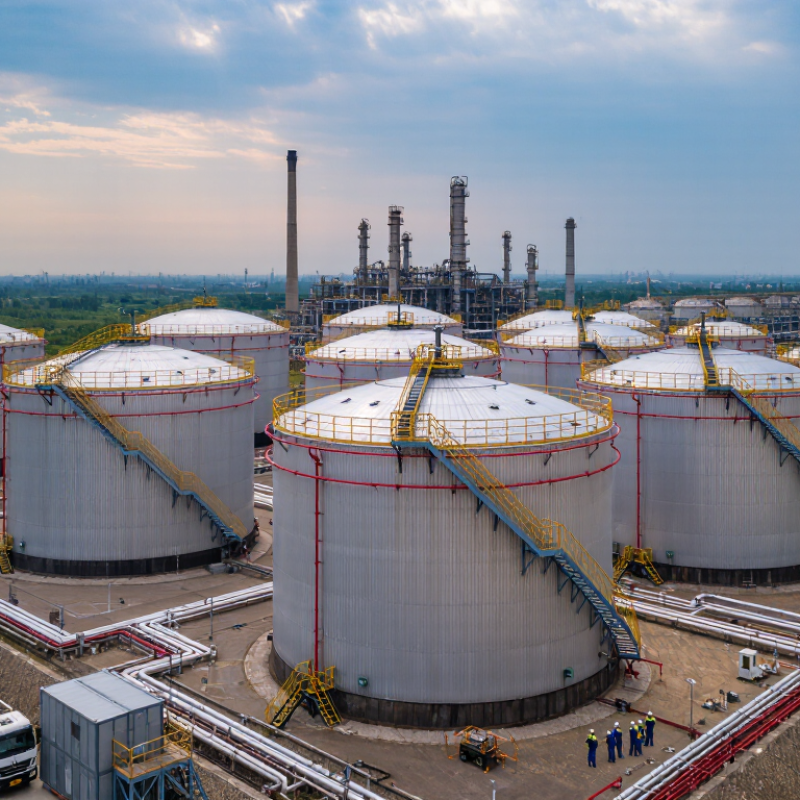
What Defines a Reliable Oil Storage Tank Manufacturer?
A reliable oil storage tank manufacturer proves its value through engineering discipline, not polished brochures. Global buyers should examine design records, factory controls, and project experience. The manufacturer should understand local wind, seismic, temperature, and foundation conditions. Design calculations must address shell thickness, roof loading, settlement, corrosion allowance, and safe access. Material certificates should follow every plate from delivery to installation. Welding procedures, welder qualifications, and inspection records also require clear evidence. Non-destructive testing should cover critical welds, while hydrostatic testing confirms tank integrity. Small omissions often become expensive site problems.
Factory capability matters. Inspectors should check plate cutting, welding alignment, dimensional control, blasting, and coating conditions. A dependable supplier can explain surface preparation, coating thickness, curing time, and repair procedures without vague answers. Documentation should include drawings, inspection plans, test reports, operation manuals, and maintenance guidance. It should remain useful after commissioning. After-sales support also deserves scrutiny. Can the team respond to leakage concerns, coating damage, or settlement observations? Response time matters. So does technical language that field workers understand. No manufacturer is perfect. Even careful inspections can miss a poor repair or rushed adjustment. Buyers should therefore use independent verification when project risk is high. Reliability grows from repeated evidence, not confident promises.
How to Compare Tank Designs, Materials, and Technical Standards
Choosing among the 10 best oil storage tank manufacturers requires more than comparing prices or polished project photos. A serious review begins with tank design. Vertical, welded tanks suit many large above-ground facilities, while floating roofs can reduce vapor loss for suitable products. Fixed roofs may be simpler, but they need careful venting and pressure control. Capacity, operating temperature, wind, seismic conditions, and soil strength should guide the specification. Do not choose from photographs.
Material selection affects service life and maintenance. Carbon steel is widely used, but corrosion allowance, internal coatings, and cathodic protection deserve close attention. Stainless steel may suit more aggressive conditions, though its higher cost is not always justified. Ask whether materials match the stored product, cleaning method, and local climate. A coating can look excellent during delivery and still fail without proper surface preparation.
Technical standards create a useful comparison point. Check compliance with the applicable editions of API, EN, or other recognized tank standards. Request design calculations, welding procedures, welder qualifications, material certificates, and non-destructive testing records. Hydrostatic testing should also reflect the site foundation and drainage plan. Manufacturer reliability depends on documentation, inspection access, and realistic delivery control. A common mistake is trusting certificates without checking their scope. No checklist is perfect. Independent inspection can reveal small problems before installation becomes expensive.
10 Best Oil Storage Tank Manufacturers for Global Buyers? - How to Compare Tank Designs, Materials, and Technical Standards
Anonymized comparison of ten common oil-storage supplier profiles. The specifications below reflect established industry practices and international standards; actual capacities, materials, certifications, and delivery scopes must be verified in each supplier’s technical proposal.
| Profile | Typical Tank Design | Typical Capacity Range | Primary Materials | Roof and Bottom Options | Relevant Standards | Fabrication and Testing | Best-Fit Application |
|---|---|---|---|---|---|---|---|
| 01 | Large welded atmospheric tank | 500–100,000 m³ | Carbon steel; stainless steel for corrosive service | Fixed cone roof, external floating roof; flat or cone-bottom | API 650, EN 14015, ISO 28300, NFPA 30 | Shop-fabricated components; site welding; radiography or ultrasonic examination; hydrostatic test | Refineries, terminals, and crude-oil storage farms |
| 02 | Low-pressure welded storage tank | 100–20,000 m³ | Carbon steel with internal coating or corrosion allowance | Fixed dome or cone roof; ringwall or concrete-supported bottom | API 650, API 2000, EN 14015, NFPA 30 | Weld procedure qualification, visual inspection, vacuum-box testing, leak testing | Diesel, fuel oil, lubricants, and intermediate products |
| 03 | External floating-roof tank | 1,000–150,000 m³ | Carbon steel shell; aluminum or steel floating roof components | Pontoon or double-deck floating roof; flat-bottom foundation | API 650 Annex C, API 653, API 2000, NFPA 30 | Roof-drain testing, seal inspection, weld NDT, settlement survey | Volatile hydrocarbons where vapor-loss control is important |
| 04 | Internal floating-roof tank | 500–80,000 m³ | Carbon steel shell with aluminum or steel internal roof | Fixed external roof plus pontoon or pan-type internal roof | API 650, API 2000, ISO 28300, NFPA 30 | Dimensional checks, seal-gap inspection, shell NDT, hydrostatic test | Gasoline, naphtha, and products requiring reduced emissions |
| 05 | Shop-fabricated vertical tank | 10–500 m³ | Carbon steel, stainless steel, or galvanized steel | Cone, dome, or flat roof; flat or dished bottom | UL 142, STI SP001, API 650 where applicable, NFPA 30 | Factory dimensional inspection, weld inspection, leak testing, coating checks | Fuel distributors, workshops, farms, and smaller depots |
| 06 | Horizontal cylindrical tank | 5–150 m³ | Carbon steel or stainless steel; epoxy-lined interiors | Dished or elliptical ends; saddles or concrete supports | UL 142, EN 12285-2, API 12F for applicable field conditions | Factory welding, pressure or leak testing, coating-thickness measurement | Fuel stations, mobile sites, and space-constrained installations |
| 07 | Double-wall containment tank | 20–5,000 m³ | Carbon steel inner tank; carbon steel or reinforced outer containment wall | Fixed roof; flat-bottom primary and secondary containment systems | UL 142, STI SP001, NFPA 30, local environmental regulations | Interstice leak detection, weld NDT, hydrostatic or pneumatic testing as specified | Sensitive sites requiring secondary spill containment |
| 08 | Bolted or modular steel tank | 50–10,000 m³ | Galvanized or coated carbon steel; stainless steel for selected services | Aluminum or steel dome roof; liner-supported flat bottom | AWWA D103, API 650 where applicable, NFPA 30 | Torque verification, liner inspection, holiday testing, water-tightness testing | Remote locations, rapid installation, and projects with limited hot work |
| 09 | Vertical pressure-rated tank | 10–2,000 m³ | Carbon steel or stainless steel selected for design pressure and product compatibility | Dished, conical, or torispherical heads; supported skirt or legs | API 620, ASME Section VIII where applicable, API 2000 | Radiography or ultrasonic examination, pressure testing, relief-device verification | Pressurized hydrocarbons, blending, and specialized process storage |
| 10 | Corrosion-resistant specialty tank | 5–10,000 m³ | Stainless steel, clad steel, or carbon steel with engineered lining | Fixed roof; cone, flat, or sloped bottom according to drainage needs | API 650, EN 14015, ISO 12944, ASTM coating-test methods | Material certificates, PMI where required, coating holiday testing, weld NDT | High-sulfur crude, additives, corrosive fuels, and long-service projects |
Key Factors for Evaluating Global Manufacturing Capabilities
10 Best Oil Storage Tank Manufacturers for Global Buyers?
Key Factors for Evaluating Global Manufacturing Capabilities
Choosing among the 10 best oil storage tank manufacturers requires more than comparing price lists. Global capability begins with repeatable engineering. Ask for drawings, material grades, weld procedures, and inspection records from comparable projects. A serious factory can explain shell thickness, roof design, corrosion allowance, and foundation loads without hiding behind sales language. Look for experienced engineers. Small details matter, such as nozzle alignment and drain accessibility.
Verify production capacity in person or through an independent audit. Check plate cutting, rolling, welding, blasting, coating, and dimensional inspection. A clean workshop is useful, but process evidence matters more. Request welder qualifications, non-destructive testing reports, calibration certificates, and coating thickness readings. Confirm how the manufacturer controls heat distortion and stores steel during humid seasons. Ask whether its quality team can stop a shipment. That answer reveals authority.
For international delivery, examine packing plans, export documents, port experience, spare parts, and remote commissioning support. Tanks may arrive in sections, with missing bolts causing expensive delays. Require a clear inspection and acceptance plan before fabrication begins. I would also test communication through a small technical question. Slow, vague replies often become larger project problems. No supplier is flawless. Review how it records defects, corrects them, and learns from near misses. A transparent manufacturer shows both successful results and uncomfortable lessons.
Profiles of Ten Leading Oil Storage Tank Manufacturers
Global buyers often compare oil storage tank manufacturers by engineering depth, not brochure size. The following ten profiles reflect practical selection criteria used on industrial projects.
One manufacturer specializes in welded carbon-steel tanks with internal floating roofs. Its teams focus on vapor reduction, shell alignment, and field inspection. Another builds stainless-steel tanks for refined products and demanding coastal environments. Precise welding records support traceability. A third supplies API-aligned atmospheric tanks, with attention to foundation settlement and roof drainage. Its engineers often review soil reports before production. One regional fabricator offers modular tanks for remote sites. Flat-packed components can reduce transport costs, but assembly quality remains critical. It is not glamorous.
A fourth manufacturer combines tank fabrication with firefighting and foam-system integration. This approach can simplify interface management during installation. A fifth produces large welded tanks and uses automated welding for consistent seam quality. Human inspection still matters. Another specializes in underground and partially buried designs, where corrosion protection and access planning require careful review. A seventh focuses on bolted steel tanks with replaceable liners. These systems can shorten installation time, although liner damage deserves serious attention. That weakness is easy to overlook.
An eighth manufacturer serves ports and fuel terminals with high-capacity storage solutions. Its project experience includes loading arms, containment areas, and transfer piping. A ninth develops insulated tanks for products affected by temperature changes. Heating coils, insulation thickness, and energy use must be checked together. The tenth offers engineering, procurement, construction, and maintenance support under one contract. This can improve accountability, but buyers should verify subcontractor qualifications. Factory audits, material certificates, weld maps, pressure tests, and service response times reveal more than polished marketing.
How to Select the Right Supplier for Your Oil Storage Project
Choosing an oil storage tank supplier requires more than comparing prices. A reliable manufacturer should show proven project experience, qualified engineers, and traceable production records. Ask for welding procedures, material certificates, inspection reports, and pressure or leak-test results. These documents reveal how carefully the tank was built.
Consider your oil type, storage volume, temperature range, and site conditions. A tank designed for a dry inland site may fail sooner in a coastal environment without suitable corrosion protection.
Review foundation requirements, transport limits, installation support, and spare-part availability before signing a contract. I once underestimated delivery access, and the tank arrived before the site entrance was ready. That mistake was avoidable.
Tips: Request references from projects with similar climates and capacities. Confirm coating thickness, inspection stages, warranty terms, and response times in writing. Ask whether the supplier can provide drawings for local construction review. A low quote can still be expensive. Do not rely on polished brochures alone. Factory visits, independent inspections, and clear communication often provide stronger evidence of supplier reliability. Also, leave room for honest uncertainty; ground conditions and local approvals may change the original plan.

