What Are the Best Types of Geothermal Systems from China?
Choosing the best geothermal systems from China requires more than comparing prices or advertised heating capacity. China offers several proven options, including horizontal ground-source heat pumps, vertical borehole systems, water-source heat pumps, and hybrid designs. Each type suits different ground conditions, building sizes, and climate demands. A horizontal system may work well beside a low-rise home with enough land. A vertical system can serve a hotel or factory where land is limited. Water-source equipment may perform efficiently near a reliable aquifer, lake, or industrial water loop.
Real performance depends on careful engineering. Experienced Chinese suppliers should provide thermal response testing, borehole records, seasonal efficiency data, and clear maintenance plans. Ask about compressor quality, heat exchanger materials, control systems, and replacement parts. Small details matter. A poorly insulated pipe can waste energy before it reaches the building. Coastal projects may also require stronger corrosion protection. Northern installations need dependable antifreeze protection and winter commissioning. These conditions cannot be solved by a catalog alone.
There is no universal winner. That deserves emphasis. The cheapest quotation may conceal drilling risks, weak controls, or limited after-sales support. Buyers should compare lifecycle cost, not only equipment cost. Independent site surveys and local regulatory checks remain essential. Some published efficiency figures also appear optimistic, especially when tested under ideal conditions. This article examines the main geothermal systems made in China, their practical strengths, limitations, and suitable applications, while encouraging careful verification before purchase. A sensible decision begins with the building, the ground, and the people responsible for installation.
Chinese Geothermal Systems: An Overview of Main Types
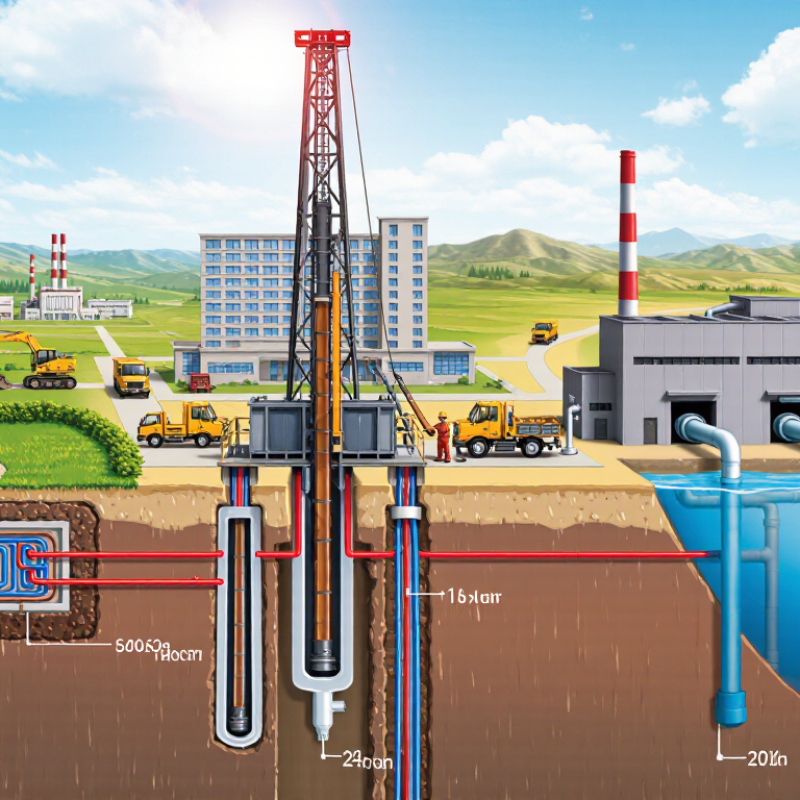
China’s geothermal systems fall into several practical categories. Shallow geothermal heat pumps are widely used for homes, offices, schools, and public buildings. They exchange heat with soil, groundwater, or surface water. Closed-loop systems circulate fluid through buried pipes, while open-loop systems pump and return groundwater. Vertical boreholes suit crowded urban sites. Horizontal loops need more land but can reduce drilling costs.
Deep geothermal systems use naturally hot water from underground reservoirs. They support district heating, bathing facilities, greenhouses, and industrial processes. In northern cities, deep-water heating can warm apartment blocks during winter. However, reservoir temperature and flow rates vary greatly between regions. Reinjection is essential for pressure management and long-term resource protection. Surface-water heat pumps also serve buildings near lakes, rivers, and reservoirs. Their performance may change with seasonal water temperatures.
A reliable design begins with a geological survey, load calculation, and water-quality test. Engineers should check drilling depth, corrosion risk, local permits, and maintenance access. For example, mineral-rich groundwater can block heat exchangers and increase cleaning needs. Hybrid systems may combine geothermal equipment with solar or conventional backup heating. They can improve resilience during extreme weather. Still, they may add control complexity and installation costs. Some project estimates look attractive before drilling, yet actual ground conditions can differ. That uncertainty deserves honest budgeting. Energy savings also depend on insulation, controls, and user behavior, not equipment alone.
Chinese Geothermal Systems: An Overview of Main Types
Geothermal systems in China are commonly selected according to resource temperature and depth. Shallow ground-source heat pumps generally use stable ground temperatures for heating and cooling, while hydrothermal systems provide direct heat or electricity. Enhanced geothermal systems are designed for hot rock resources where natural permeability is limited. The temperature bands shown are indicative ranges; actual values vary by basin, well depth, and local geological conditions.
Ground-Source Heat Pumps for Homes and Commercial Buildings
What Are the Best Types of Geothermal Systems from China?
For homes in China, closed-loop ground-source heat pumps are often the safest starting point. Horizontal loops suit properties with open land and moderate heating demand. Vertical boreholes require less surface space, but drilling costs are higher. In dense cities, this difference matters. A professional site survey should examine soil, groundwater, climate, and available electricity before selecting equipment.
Water-to-water systems can serve radiant floors, fan-coil units, and domestic hot-water tanks. Water-to-air systems are useful when homes already use ductwork. Commercial buildings usually need modular units, careful load control, and separate temperature zones. Hospitals, schools, and offices may combine ground-source heat pumps with cooling towers or backup boilers. That improves resilience during extreme weather.
Quality depends on design, not appearance. Engineers should review seasonal efficiency, noise levels, refrigerant safety, controls, and maintenance access. A thermal response test can improve borehole sizing for larger projects. Poor loop spacing may reduce performance over time. That mistake is expensive. Certified installers, transparent test reports, and clear warranty terms support reliable purchasing. Water chemistry also deserves attention, especially in open-loop systems, where scaling can damage heat exchangers. Some low-cost proposals look attractive, but they may exclude drilling, controls, or commissioning. I would question those omissions. Even a well-designed system needs monitoring during its first heating and cooling seasons. Performance can be adjusted. It is rarely perfect on day one.
Direct-Use Geothermal Heating for Districts and Greenhouses
China offers strong options for direct-use geothermal heating, especially in northern districts and greenhouse zones. The World Geothermal Congress 2023 reported China’s direct-use capacity at about 40.6 GWth in 2020. Much of this capacity supports space heating, bathing, agriculture, and heat-pump applications.
For districts, a hydrothermal doublet can extract warm water through one well and reinject cooled water through another. Plate heat exchangers keep minerals away from public heating circuits. A 50–80°C resource can warm apartment blocks through low-temperature radiators or underfloor loops. China Geological Survey data reported more than 1.5 billion square meters of geothermal heating and cooling applications in 2023. That scale shows practical experience, not just laboratory promise.
Greenhouses need steadier temperatures than offices. Direct geothermal water can heat root zones, air coils, and thermal storage tanks. A cascading design may use hotter water for district heating, then lower-temperature water for vegetables. The International Energy Agency identifies geothermal heat as a reliable low-emission heating option, but local drilling conditions remain decisive. Some fields decline faster than expected. That deserves more caution.
Engineers should test flow rate, chemistry, reinjection pressure, and seasonal demand before selecting equipment. Silica, iron, and dissolved gases can increase maintenance. Heat pumps improve output from cooler resources, although electricity use changes the project’s emissions profile. Reports provide useful benchmarks, but each Chinese basin still needs independent monitoring and transparent performance data.
What Are the Best Types of Geothermal Systems from China? - Direct-Use Geothermal Heating for Districts and Greenhouses
| System Type | Heat Source and Configuration | Typical Temperature Range | Best Direct-Use Applications | Main Advantages | Key Requirements and Limitations | Suitability for China |
|---|---|---|---|---|---|---|
| Open-Loop Aquifer System | Production wells extract geothermal water, while injection wells return cooled water to the same aquifer. | Approximately 40–90°C for many low- to medium-temperature resources; actual values depend on the local reservoir. | District heating, greenhouse heating, bathing facilities, aquaculture, and snow melting. | High heat-transfer capacity, direct use of natural geothermal heat, and strong seasonal heating potential. | Requires suitable groundwater chemistry, permits, reliable wells, filtration, corrosion control, and reinjection management. | Highly suitable in regions with proven geothermal reservoirs and established reinjection policies. |
| Geothermal Heat-Exchanger System | Geothermal water transfers heat through a plate or shell-and-tube heat exchanger without entering the building distribution loop. | Commonly designed for geothermal water above 35°C, with lower-temperature water often supported by a heat pump. | District heating networks, public buildings, greenhouse heating, and industrial preheating. | Protects internal pipework from mineral-rich water and allows easier maintenance of the secondary circuit. | Heat exchangers must be sized for fouling, scaling, dissolved gases, and temperature differences. | A practical choice for many Chinese district-heating projects because it separates geothermal water quality from building systems. |
| Geothermal Heat Pump System | A heat pump upgrades heat from groundwater, shallow ground, or another geothermal source for low-temperature heating. | Ground-side temperatures are often about 10–25°C; supply water is commonly designed around 35–55°C. | Residential districts, offices, schools, hotels, greenhouse heating, and combined heating and cooling. | Works with moderate-temperature resources, provides controllable output, and can offer cooling in summer. | Needs electrical power, correctly designed ground loops or wells, and low-temperature emitters for best efficiency. | Well suited to northern and eastern Chinese cities where heating and cooling demand both exist. |
| Closed-Loop Ground-Source System | Water or antifreeze circulates through horizontal trenches, vertical boreholes, or energy piles and does not exchange mass with groundwater. | Ground temperatures are typically near the local annual average; heat-pump output is commonly 35–55°C. | New residential districts, campuses, greenhouses, and buildings where groundwater use is restricted. | Low water-consumption, stable underground conditions, and reduced exposure to groundwater scaling or contamination. | Requires adequate land or drilling capacity, careful thermal-balance design, and sufficient capital investment. | Suitable for planned developments and campuses, especially where aquifer reinjection is difficult. |
| Cascaded Direct-Use System | The same geothermal water is used successively, for example in district heating, greenhouses, aquaculture, and final reinjection. | Often begins above 50°C and uses progressively lower temperatures in downstream applications. | Integrated district heating and greenhouse zones, agricultural parks, aquaculture, and industrial heat users. | Maximizes heat utilization, reduces wasted energy, and can improve the overall economics of a geothermal resource. | Needs coordinated users, hydraulic balancing, water-quality monitoring, and careful temperature matching. | Particularly attractive in geothermal agricultural regions where heating demand is distributed across several users. |
| Mine-Water Geothermal System | Water from abandoned or active mine workings supplies a heat exchanger or heat pump; treated water may be returned underground. | Often approximately 15–35°C, depending on mine depth, climate, and water circulation. | Nearby district heating, public buildings, industrial facilities, and greenhouse heating. | Reuses an existing water resource and can support mine-site regeneration and local low-carbon heating. | Water chemistry, pumping reliability, mine ownership, subsidence risk, and seasonal water levels require assessment. | Most relevant to former coal-mining areas in northern China with nearby heat demand. |
| Solar-Geothermal Hybrid System | Geothermal heat is combined with solar thermal collectors, thermal storage, or a heat pump to balance seasonal demand. | System temperatures vary; low-temperature distribution commonly operates around 30–50°C. | Greenhouses, residential districts, campuses, and sites with strong solar availability and seasonal heat loads. | Reduces peak electrical demand and can improve annual renewable heat utilization. | Requires additional controls, storage, collector area, and coordinated operation of multiple heat sources. | Useful in northern and western Chinese regions with good solar resources and insufficient geothermal output during peak periods. |
Note: Temperature ranges are indicative design ranges rather than guaranteed resource temperatures. Final system selection should be based on local geological surveys, well testing, water chemistry, building load profiles, reinjection requirements, and applicable regulations.
Geothermal Power Systems for Electricity Generation
What Are the Best Types of Geothermal Systems from China?
Geothermal Power Systems for Electricity Generation
China’s geothermal conditions vary widely, so power systems must match local heat and water chemistry. High-temperature fields can support flash steam plants. These systems separate hot geothermal water into steam, which drives a turbine and generator. They suit volcanic or deep sedimentary reservoirs with strong pressure. However, scaling and corrosion can reduce output without careful treatment.
Binary-cycle systems are often more practical for China’s medium-temperature resources. Hot brine passes through a heat exchanger and vaporizes a secondary fluid. That vapor turns the turbine inside a closed loop. The geothermal water remains separate and can be reinjected underground. This design produces lower emissions and works well where reservoir temperatures are moderate. It is not automatically the cheapest option.
Enhanced geothermal systems may extend electricity generation into hot, dry rock. Engineers inject water through engineered fractures, then recover heated fluid through production wells. The approach offers promise, but drilling costs and reservoir uncertainty remain serious concerns. Small temperature errors can change the project’s financial results. Geological surveys, tracer tests, pressure monitoring, and corrosion studies should guide each design. China’s experience shows that reinjection planning matters as much as turbine selection. A neglected reservoir may lose pressure faster than expected. Performance data should be checked across seasons, because winter heating demand can alter operating conditions.
How to Choose the Best Chinese Geothermal System for Your Needs
Choosing a Chinese geothermal system starts with the building, not the equipment catalogue. Ground-source heat pumps suit stable, year-round heating and cooling demands. Water-source systems can work well where reliable wells or nearby water bodies are available. Direct-use geothermal heating may fit regions with accessible hot groundwater and suitable water chemistry.
Site data matters most. Ask for a load calculation based on local winter temperatures, insulation, occupancy, and hot-water use. Request ground temperature, soil conditions, groundwater levels, and drilling records before selecting a loop design. For a home with limited land, vertical boreholes may be practical. Larger sites may benefit from horizontal loops, but trenching can disturb gardens and existing services. Always check local permits and environmental requirements.
A reliable supplier should provide performance data under conditions close to your climate, not only laboratory maximums. Compare seasonal efficiency, noise levels, refrigerant details, controls, warranty coverage, and replacement-part access. Ask whether technicians can test flow rates, pressure, and antifreeze concentration after installation. Field experience shows that poor loop sizing causes more trouble than modest equipment differences. A low purchase price can look attractive, yet it may hide weak commissioning or higher electricity use. No design is perfect. I would choose transparent calculations, documented testing, and maintainable components over impressive promises. A trial monitoring period can reveal comfort problems before they become expensive repairs.
Related Posts
-
What is Geothermal Heating and How Does It Work?
-
Top Benefits of Geothermal Heat Pump System for Homeowners?
-
How to Choose the Best Geothermal Heat Pump System for Your Needs?
-
Top 10 Reasons to Choose a Geothermal Heat Pump in Colorado
-
What is a Geothermal Heat Pump in Colorado?
-
2025 How to Choose the Best Geothermal Systems for Your Home