7 Tips to Buy a Germany WVTA Certified L6e Quadricycle
Buying a light quadricycle from Germany can seem simple until documents, specifications, and after-sales support enter the discussion. An L6e model may look like a small city car, yet its classification affects speed, power, seating, safety equipment, and registration requirements. A careful buyer should understand what “WVTA certified” actually means before comparing prices or delivery promises. The phrase L6e Quadricycle Wvta Certified Germany should lead to verification, not automatic trust.
This guide introduces seven practical tips for checking a German WVTA-certified L6e quadricycle. It focuses on the approval number, Certificate of Conformity, vehicle identification number, battery details, charging equipment, warranty terms, and seller reliability. Ask for clear scans, not cropped screenshots. Compare the VIN on the vehicle with every official document. Check whether the stated battery range was measured under controlled conditions, because winter traffic and hills can reduce it sharply. A short test drive can reveal weak brakes, unusual steering noise, or poor visibility.
No checklist is perfect. A polished website can still hide vague answers. Conversely, a small dealer may provide excellent technical support. Buyers should contact the relevant registration authority before payment, especially when importing the vehicle into another country. Requirements can change, and assumptions are expensive. Independent inspection is worthwhile when the vehicle has been stored outdoors or previously registered. These steps cannot remove every risk, but they can make the decision more informed, transparent, and easier to defend.
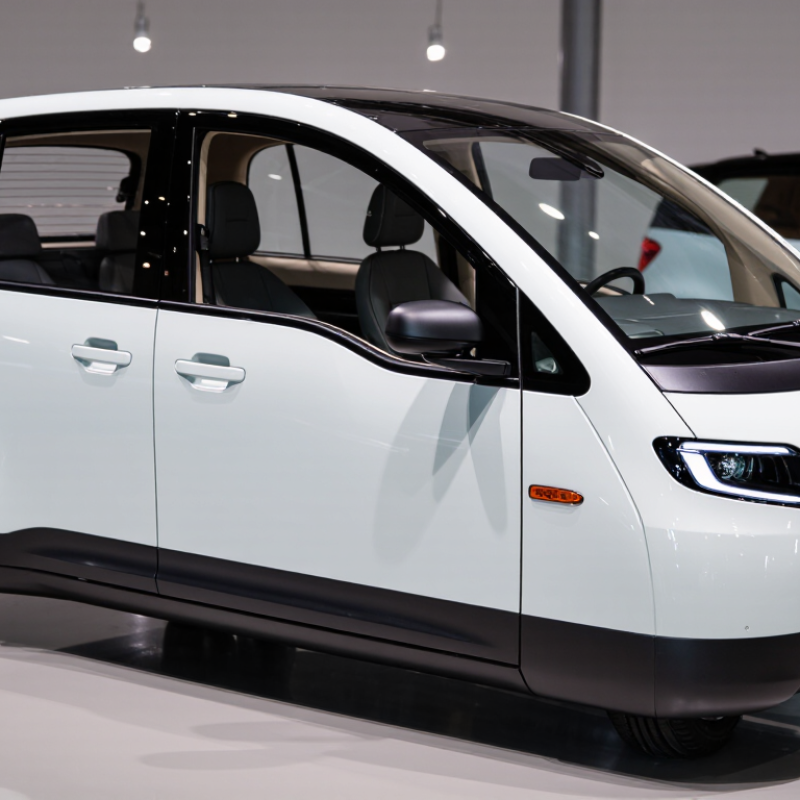
Define the Germany WVTA Standard for L6e Quadricycles
7 Tips to Buy a Germany WVTA Certified L6e Quadricycle
Define the Germany WVTA Standard for L6e Quadricycles
Germany WVTA means Whole Vehicle Type-Approval issued under the European Union vehicle framework. It is not a separate German technical category. For an L6e quadricycle, Regulation (EU) No. 168/2013 generally limits design speed to 45 km/h. The rated maximum continuous power is normally limited to 6 kW. Unladen mass must also remain within the applicable 425 kg limit, excluding traction batteries for electric vehicles.
Check the approval certificate, not only a sales badge. The document should identify the vehicle type, variant, version, VIN range, mass, dimensions, power output, braking system, lighting, tyres, and emissions or electric safety details. Germany’s Federal Motor Transport Authority, known as KBA, is the key national authority connected with German type-approval administration. A credible seller should provide the EU WVTA number and a Certificate of Conformity. Missing paperwork is a warning sign.
The IEA Global EV Outlook 2024 reported more than 14 million electric car sales worldwide in 2023. That wider market growth does not automatically prove L6e compliance. Battery placement matters. So do seat-belt anchors, mirrors, glazing, and electromagnetic compatibility. A physical inspection can reveal loose trim, weak door latches, or unclear charging labels. Small defects matter.
Be careful with translated documents. One word can change the rated mass. I would also verify the approval number independently, because a copied certificate can look convincing. The standard is technical, but the purchase decision is practical: confirm the exact configuration, not merely the vehicle family.
Verify the Vehicle’s Certification and Legal Documentation
Before buying an L6e quadricycle, verify its Whole Vehicle Type Approval, not just the seller’s description. Ask for the original European Certificate of Conformity (CoC) and check its approval number. The vehicle identification number, manufacturer plate, model variant, mass, speed category, and power rating must match the vehicle in front of you. Small discrepancies matter.
Request clear scans before making payment. Inspect the approval authority details, issue date, vehicle category, and applicable emissions or safety information. A CoC supports registration, but it does not guarantee that later modifications remain compliant. Check for changed lighting, extra seats, altered suspension, or an unapproved battery system. These details are easy to overlook.
Confirm that the document is genuine through the issuing manufacturer or the relevant German type-approval authority. Do not rely on a translated screenshot or an unsigned spreadsheet. Ask whether the approval covers this exact variant, not merely a similar model. I have found that sellers sometimes confuse an internal test report with WVTA approval. That is a warning sign.
Also review the purchase invoice, ownership records, customs paperwork, and any registration documents required in your country. Requirements can differ after import. If the VIN is damaged, concealed, or inconsistent, stop the transaction. Keep every email and document. A careful paper trail may feel excessive, but it can expose costly problems before delivery.
Compare Safety, Performance, Range, and Equipment Specifications
7 Tips to Buy a Germany WVTA Certified L6e Quadricycle
Tip 1: Check the WVTA certificate, vehicle identification number, and conformity documents before discussing price. Germany-based certification should match the exact vehicle configuration.
Tip 2: Inspect safety equipment closely. Look for dependable brakes, secure seat belts, clear lighting, strong door latches, and effective windshield defogging. Tip 3: Sit inside and assess visibility. A low seating position may feel stable, but blind spots can surprise inexperienced drivers.
Tip 4: Compare real performance, not attractive brochure figures. Test acceleration, hill climbing, steering response, and braking on familiar roads. Tip 5: Study the range under realistic conditions. Cold weather, hills, passengers, heating, and frequent stops can reduce battery distance. I once underestimated winter use. That mistake matters. Ask for charging time, battery warranty, and replacement procedures. A short demonstration is useful, but it cannot reproduce every daily route.
Tip 6: Review equipment against your routine. Useful details include adjustable seats, storage space, a reverse camera, simple controls, and a practical charging cable. Extra screens may look impressive yet add little value. Tip 7: Confirm after-sales support, inspection schedules, spare-part access, and written warranty terms. Keep copies of every document. A polished cabin proves little. During a professional inspection, check tire wear, panel alignment, charging behavior, and unusual electrical noises. The best choice balances certified safety, usable performance, dependable range, and equipment you will actually use.
Assess Supplier Reliability, Warranty, and After-Sales Support
A Germany WVTA certificate confirms regulatory conformity, not dependable service. Ask the supplier for the approval number, Certificate of Conformity, production records, and test documentation. Verify that the chassis identification matches every document. A missing file is a warning sign.
Supplier reliability becomes clearer through evidence. Request factory audit results, delivery records, spare-parts stock levels, and two commercial references. The European Commission’s 2023 Safety Gate report recorded 3,412 product-safety alerts, showing why traceability deserves attention. Ask how the supplier handles technical updates, recalls, and corrective actions. Written answers matter more than confident promises.
Warranty terms should specify mileage, duration, battery coverage, exclusions, labor rates, and claim response times. A 24-month warranty sounds useful, but it may exclude controllers, chargers, or water damage. Test the claims process with a sample fault before signing. After-sales support needs local technicians, diagnostic access, repair manuals, and common parts near your market. ACEA’s Vehicles on European Roads 2024 report places the average EU passenger-car age at 12.5 years. Parts support must therefore survive beyond the first sales season. I would also request a monthly parts-availability report. That may feel excessive, but waiting six weeks for a small sensor quickly changes the ownership experience.
7 Tips to Buy a Germany WVTA Certified L6e Quadricycle - Assess Supplier Reliability, Warranty, and After-Sales Support
| Tip | Assessment Dimension | Verified Facts or Target Criteria | Documents or Evidence to Request | Warning Signs | Suggested Score |
|---|---|---|---|---|---|
| 1 | Confirm the L6e classification | Under EU Regulation 168/2013, an L6e light quadricycle is generally limited to a maximum design speed of 45 km/h, a maximum continuous rated or net power of 6 kW, and a mass in running order of no more than 425 kg, excluding the mass of batteries for electric vehicles. | Vehicle specification sheet, technical type-approval data, VIN information, and the applicable category shown on the Certificate of Conformity (CoC). | The vehicle is advertised as an L6e but the speed, power, or mass figures do not match the approval documents. | 0–5 |
| 2 | Validate Germany-issued WVTA evidence | Whole Vehicle Type Approval is issued by an EU type-approval authority. For Germany, the competent authority is the Federal Motor Transport Authority (KBA). WVTA approval applies to a defined vehicle type, variant, and version rather than automatically proving that every advertised configuration is identical. | EU type-approval number, approval extension records, KBA-related approval documentation, CoC template, and a VIN-to-approval confirmation. | Only a generic “CE certificate,” laboratory report, or undated approval image is provided instead of vehicle type-approval documentation. | 0–5 |
| 3 | Check supplier traceability and production control | A reliable supplier should be able to trace the manufacturer, production facility, vehicle identification number, approved configuration, and quality-control process. Type approval does not replace normal supplier due diligence. | Legal company details, factory address, VIN sample, production inspection procedure, batch records, recall process, and an organization responsible for EU regulatory communication. | Inconsistent legal details, unexplained changes in manufacturing location, unavailable VIN records, or refusal to identify the responsible economic operator. | 0–5 |
| 4 | Review warranty coverage in writing | For consumer sales in the EU, the legal guarantee for goods is generally at least two years under Directive (EU) 2019/771. Commercial purchases, battery coverage, consumables, and use outside the seller’s country may be governed by different contractual terms. | Warranty duration, start date, geographic scope, covered components, battery capacity threshold, labor and transport coverage, exclusions, claim procedure, and spare-part availability period. | Verbal promises only, unclear battery exclusions, broad “wear and tear” exclusions, or a warranty that depends on undocumented maintenance requirements. | 0–5 |
| 5 | Measure after-sales response capability | After-sales quality is best assessed through measurable service commitments. A practical purchasing target is a written response within two business days, a documented fault-diagnosis process, and a defined repair or replacement escalation route. | Service contact details, ticket or claim workflow, service-level targets, authorized repair locations, remote diagnostic procedure, and escalation contacts. | Only a sales contact is available, support is limited to messaging applications, no repair network is identified, or response times are not documented. | 0–5 |
| 6 | Verify spare parts and battery support | Critical parts should be identifiable by part number and compatible with the approved vehicle configuration. For electric models, battery replacement must address electrical compatibility, safe handling, transport, and authorized installation. | Parts catalogue, price list, stock or lead-time statement, battery specifications, charger documentation, repair manual, diagnostic-tool availability, and end-of-life battery handling instructions. | No part numbers, indefinite delivery times, proprietary components with no replacement policy, or instructions to use unapproved batteries or chargers. | 0–5 |
| 7 | Complete a pre-delivery and registration check | The delivered vehicle should match the approved type, VIN, equipment, and CoC. Registration requirements can vary by country and use case, so the buyer should confirm local insurance, registration, driving-licence, and road-use obligations before shipment. | Signed pre-delivery inspection, final invoice, CoC, owner’s manual, service schedule, charging instructions, conformity labels, delivery photographs, and registration-support checklist. | VIN mismatch, missing CoC, incomplete manual, unrecorded delivery inspection, or a promise that registration is guaranteed without checking the destination country’s rules. | 0–5 |
| Total Supplier Assessment Score | / 35 | ||||
Calculate Total Ownership Costs Before Completing the Purchase
7 Tips to Buy a Germany WVTA Certified L6e Quadricycle
A Germany WVTA certificate confirms type approval, not affordable ownership. Calculate every cost before signing. Include the purchase price, registration, insurance, servicing, tyres, charging, financing, and depreciation. A spreadsheet works better than a sales estimate.
Tip: Check real energy use. The IEA Global EV Outlook 2024 reports that many battery-electric vehicles consume about 15–20 kWh per 100 kilometres. For 6,000 kilometres annually, an L6e using 17 kWh per 100 kilometres needs roughly 1,020 kWh. At €0.40 per kWh, reported around Germany’s 2024 household average by BDEW, home charging costs about €408 yearly. Public charging can increase this sharply. Small vehicles still face big tariffs.
Tip: Price the quiet expenses. ACEA’s Vehicles on European Roads report shows the average European passenger car is over 12 years old, reminding buyers that long-term maintenance matters. Ask for battery warranty terms, replacement pricing, inspection intervals, brake durability, and winter range. Insurance quotes should use the exact L6e classification, not a generic electric-vehicle category.
Depreciation is harder to predict. That part deserves more humility. Compare three-year resale estimates from independent classifieds and ask dealers for written assumptions. A low purchase price may hide expensive financing or weak resale demand. Add a contingency reserve of 10–15% for unexpected repairs, charging equipment, and seasonal efficiency losses. The cheapest invoice is not always the cheapest vehicle.

