How to Choose a CO2 Heat Pump for Your Business

Choosing a CO2 heat pump for a business is not just a matter of comparing catalog efficiencies. The right unit must match your hot-water demand, operating schedule, and existing heating system. A hotel may need a steady supply for showers and laundry. A food processor may need high-temperature water during short production windows. Those differences matter.

Professor Armin Hafner of the Norwegian University of Science and Technology is a recognized refrigeration and heat-pump researcher. A concise paraphrase of his application-focused perspective is: “Select the system for the job it must perform.” This is a paraphrase, not a verbatim quotation. It points to a practical starting question: what temperatures and flow rates does your site need, hour by hour? CO2 heat pump performance depends on operating conditions, including the temperature lift between the heat source and the water delivered. A brochure figure alone cannot predict your energy bill.

Before choosing equipment, gather measured consumption data, seasonal source temperatures, and the required outlet temperature. Ask suppliers to explain performance at your actual conditions, not only at a favorable test point. Check installation space, noise limits, maintenance access, and how the unit will work with existing boilers or storage tanks. Then compare whole-life costs, including electricity, service, and expected downtime. Small details count: a cramped plant room can complicate maintenance. And an attractive efficiency estimate may rest on assumptions your site cannot meet. A careful assessment is less glamorous, but it can prevent an expensive mismatch.
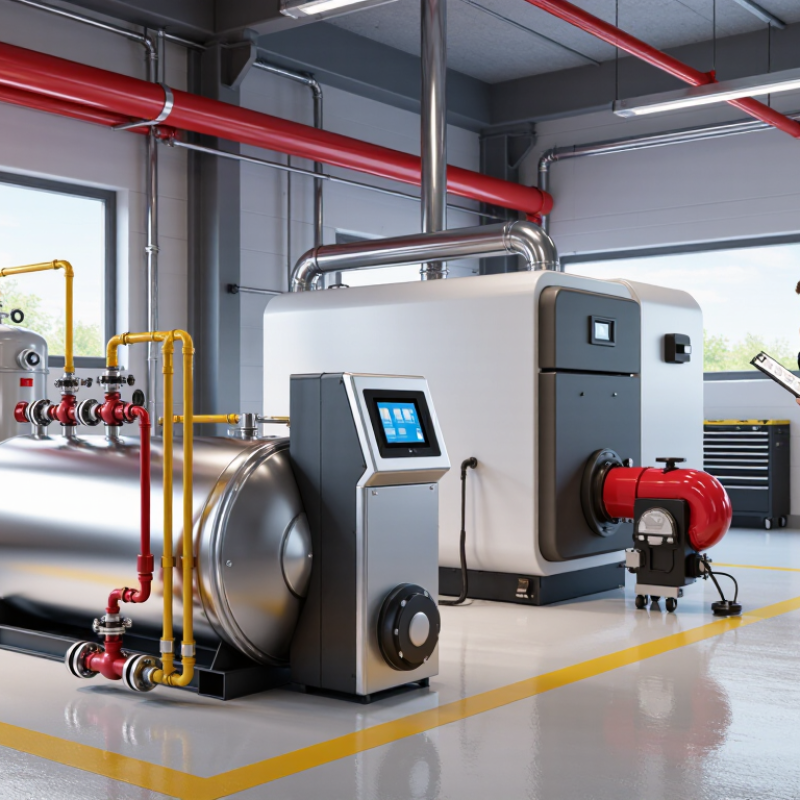
How to Choose a CO2 Heat Pump for Your Business

Define Your Business’s Heat Load and Required Supply Temperature

Before selecting a CO2 heat pump, map how much heat your business uses and when it needs it. Monthly gas or electricity bills provide a starting point, but they can hide short peaks. A hotel may need hot water before breakfast, while a workshop may demand steady process heat throughout a shift. Small details matter. Record hourly demand where possible, and note seasonal changes, cleaning cycles, and periods when several systems operate together.

Next, define the required supply temperature at the point of use, not just at the heat pump outlet. Check equipment specifications and measure flow and return temperatures during normal operation. A space-heating loop may work well at a lower temperature, while a washdown or production process may require hotter water. Higher delivery temperatures can reduce heat-pump efficiency, so confirm the actual requirement before sizing the system. Also consider whether a buffer tank or staged heating can cover brief peaks without oversizing the unit.

One common planning error is treating the highest recorded load as a constant demand. It may reflect a cold morning or an unusual production run. Compare meter data with operating schedules, then ask staff whether those peaks are typical. The records may be incomplete; that is worth admitting. If measurements are uncertain, allow time for temporary monitoring before final design. A clear load profile and realistic temperature target give suppliers a sound basis for proposing capacity, storage, and backup heat.

Assess Heat-Source Conditions Against R744’s 31.1°C Critical Temperature (NIST)

For a CO2 heat pump, 31.1°C is a useful reference point, not a simple heat-source cutoff. It is R744’s critical temperature, above which CO2 cannot condense through ordinary pressure changes. When the high-side temperature exceeds this point, the system operates transcritically and rejects heat in a gas cooler. The source temperature still matters: it affects evaporation, compressor lift, and how much heat the unit can extract through the year.

Measure the source where the heat pump will actually draw from it. A stream entering at 12°C in winter behaves differently from one that reaches 28°C in summer, even though both are below the critical temperature. Record seasonal temperatures, flow rates, and any expected downtime. Then compare these readings with the required water delivery temperature and the unit’s published performance data. Small temperature gaps matter. A high delivery target can raise compressor work, while a warmer, steady source may improve output. One rough screening figure can mislead; real operating profiles are often uneven. Ask a qualified designer to model the coldest source conditions and the hottest required delivery conditions before sizing equipment.

Compare Capacity and COP at Standardized EN 14511 Test Conditions

How to Choose a CO2 Heat Pump for Your Business

Compare Capacity and COP at Standardized EN 14511 Test Conditions

A CO2 heat pump’s capacity and COP only mean something when their test conditions are clear. EN 14511 provides methods for measuring performance, but results depend on the specified source and water temperatures. Compare units at matching conditions, such as the same outdoor-air temperature and hot-water outlet temperature. A COP measured with mild air and 45°C water cannot fairly be compared with one tested in colder air or at 70°C.

Numbers need context.

Check capacity at your site’s design conditions, not just a headline rating. A unit may deliver less heat on a freezing morning or when asked to produce hotter water. IEA’s The Future of Heat Pumps (2022) reports that heat pumps can be three to five times more energy-efficient than gas boilers; that broad finding is not a CO2-specific EN 14511 result. Use it as context, not a purchasing guarantee.

Ask suppliers for EN 14511 test points, capacity and COP at each point, and any operating limits. Then match those figures against your peak load and required water temperature.

Still, a tidy comparison table can hide awkward details, including defrost cycles and part-load operation. Worth checking.

Check High-Pressure Design Against R744’s 7.38 MPa Critical Pressure (NIST)

When evaluating a CO2 heat pump, treat 7.38 MPa as a reference point, not a safe pressure limit. NIST lists this as R744’s critical pressure, about 73.8 bar. Above the critical point, CO2 behaves differently, and the heat pump may operate in a transcritical cycle. That number matters.

Ask for the unit’s rated design pressure and maximum allowable working pressure on each relevant side of the system. Check that compressors, heat exchangers, valves, piping, and pressure-relief devices are rated for the specified conditions. A component’s rating should be clear in its technical documentation, not inferred from the 7.38 MPa figure. Also confirm how the controls respond during start-up, shutdown, and high ambient temperatures. Those details affect real operating pressures.

For a business, compare the documented pressure limits with the site’s expected water temperatures, outdoor conditions, and heating schedule. Ask the supplier to explain the pressure profile at your design load, and have a qualified refrigeration professional review the installation requirements. A neat specification sheet can still leave questions. I would pause if the pressure ratings or relief settings are vague, even when the projected efficiency looks attractive.

Verify Refrigerant Safety: R744 Is ASHRAE 34 Class A1

When comparing CO2 heat pumps, confirm that the refrigerant is R744 and review its safety classification in the equipment documentation. ASHRAE Standard 34 lists R744 as Class A1: “A” indicates lower toxicity, while “1” means no flame propagation under the standard’s test conditions. That matters in plant rooms, kitchens, and other occupied spaces. But A1 does not mean harmless.

CO2 can displace oxygen if released in a confined area, and high concentrations can cause serious injury. A1 is not a substitute for leak planning. Ask where sensors are placed, how alarms trigger ventilation, and whether staff can evacuate without crossing a likely leak point. Check rated pressure, too. CO2 systems operate at pressures that demand compatible piping, valves, and service procedures. A specification sheet cannot show whether shelving blocks a sensor or compressors drown out an alarm. Walk the room with the installer. Review commissioning records and maintenance intervals, and confirm technicians are trained for CO2 equipment. It may feel overly cautious, but one missed detail can outweigh an attractive efficiency estimate. The classification is a useful starting point, not the whole safety case.

How to Choose a CO2 Heat Pump for Your Business - Verify Refrigerant Safety: R744 Is ASHRAE 34 Class A1

Selection dimension Verified information What it means for your business What to verify before purchase
Refrigerant classification R744 is carbon dioxide (CO2) and is classified as A1 under ASHRAE Standard 34: lower toxicity class (A) and no flame propagation (1), under the standard’s test conditions. A1 describes toxicity and flammability classification; it does not mean that a leak is harmless or that other safety measures are unnecessary. Confirm the refrigerant is R744 and review the applicable safety standard, equipment documentation, and local codes.
Leak and exposure risk CO2 can displace oxygen and cause harmful exposure at elevated concentrations. OSHA lists a permissible exposure limit of 5,000 ppm as an 8-hour time-weighted average; NIOSH lists a 5,000 ppm time-weighted average and a 30,000 ppm short-term exposure limit. A1 status does not remove the need to assess leak scenarios, especially in enclosed or poorly ventilated areas. Ask for a site-specific risk assessment, ventilation review, and appropriately located CO2 detection and alarm provisions. Follow applicable local requirements.
System pressure CO2 has a critical pressure of approximately 7.38 MPa (73.8 bar) and a critical temperature of approximately 31.1°C. CO2 heat-pump circuits can operate at high pressures, so component ratings, installation quality, and maintenance procedures are important selection factors. Check design and maximum allowable pressures, pressure-relief arrangements, applicable pressure-equipment compliance, and technician qualifications.
Application fit CO2 heat-pump performance depends on operating conditions, including source temperature, required water temperature, and system configuration. A refrigerant classification alone does not establish energy savings or suitability for a particular building or process. Request performance data at your actual entering-water, leaving-water, and ambient conditions, and compare annual energy use with the existing system.
Installation and maintenance High-pressure refrigerant equipment requires procedures and tools suitable for its design pressures and the equipment manufacturer’s instructions. Service access, staff training, and parts availability can affect operational risk and downtime. Confirm commissioning steps, inspection intervals, emergency procedures, service response arrangements, and refrigerant-handling training.
Compliance review ASHRAE 34 refrigerant classification is only one part of a safe installation; building, fire, mechanical, and pressure-system rules may also apply. Requirements vary by jurisdiction and by the equipment’s location, charge, and installation design. Have the design reviewed against current local codes and standards by qualified professionals before installation.

Safety note: Exposure limits cited are U.S. occupational guidance values; confirm the requirements that apply at your site and jurisdiction.