How Much Does a Geothermal Heat Pump Cost in Colorado?

How much does a geothermal heat pump cost in Colorado? The honest answer depends on the house, the ground, and the loop system—not just the equipment. A retrofit in a tight Denver lot may require different drilling and access work than a new build on open land. That difference shows up in contractor bids.

The U.S. Department of Energy’s Energy Saver guidance reports that geothermal heat pumps can use 25%–50% less electricity for heating and cooling than conventional systems. It also notes that indoor components may last about 20–25 years, while ground loops can last 50 years or longer. Those figures help explain the long-term appeal, but they do not guarantee a specific bill reduction or payback period. Local electricity rates, system sizing, and installation costs still matter.

A statewide average can mislead. A practical Colorado estimate should separate equipment, drilling or trenching, ductwork changes, permits, and any available incentives. It should also compare the proposed system with a properly sized air-source heat pump or furnace, rather than with an outdated unit. The details count.

This guide examines geothermal heat pump Colorado costs, typical price drivers, and questions to ask installers before accepting a quote. We’ll also look at operating costs and long-term value using published energy guidance and project-specific considerations. One limitation deserves attention: published national cost ranges may not reflect Colorado geology or local labor. Your site assessment is the more useful starting point.
How Much Does a Geothermal Heat Pump Cost in Colorado?

Define Geothermal Heat Pumps: Ground Loops and Colorado Site Conditions

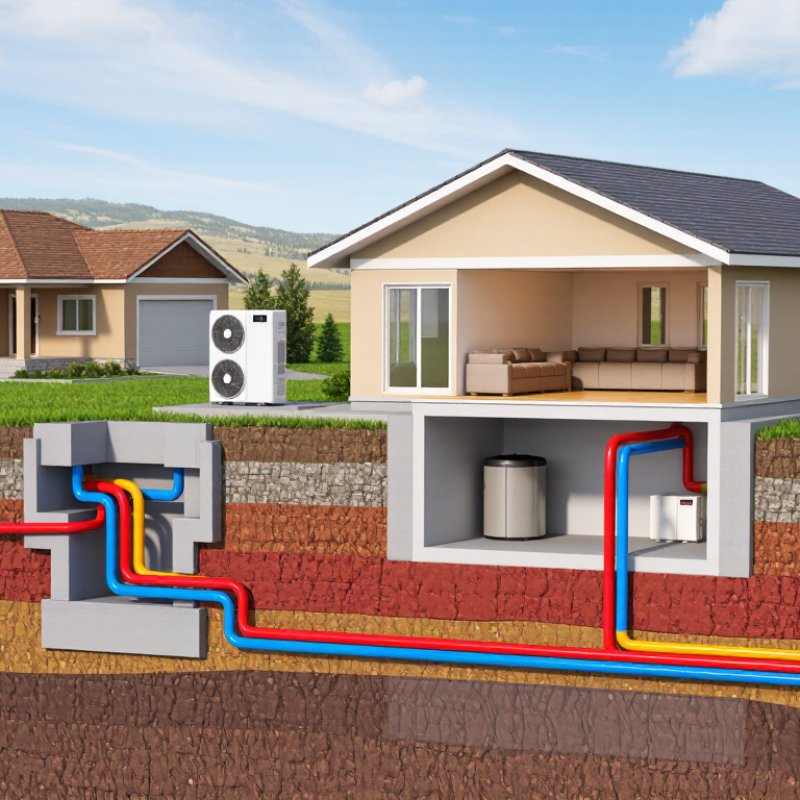
A geothermal heat pump moves heat between a building and the ground through a buried loop. In a closed-loop system, water or antifreeze circulates inside sealed pipes; it does not consume underground heat or require volcanic activity. Loops may run horizontally in trenches or vertically in drilled boreholes, depending on available land and subsurface conditions. The U.S. Department of Energy’s Energy Saver guide reports that ground temperatures below about six feet generally stay between 45°F and 75°F, varying by location. That steadier temperature helps the system exchange heat through Colorado’s cold winters and warm summers.

Colorado sites differ sharply. A flat lot with workable soil may suit trenches, while shallow bedrock, a small yard, or difficult drilling access can favor another layout—or raise installation costs. A site assessment should consider soil or rock, groundwater, loop depth, and the home’s heating and cooling loads. Not every lot is straightforward. DOE estimates geothermal heat pumps can use 25% to 50% less energy than conventional heating and cooling systems, but that range is not a promise for every Colorado home. A design based only on a statewide average can miss important details. Ask for the assumptions behind the loop design, and compare them with local drilling information and a room-by-room load calculation.

Estimate Colorado Costs Using the $15,000–$40,000 U.S. Project Benchmark

For a Colorado home, the $15,000–$40,000 U.S. project benchmark is a starting range, not a local quote. A smaller home with an accessible horizontal loop may sit nearer the low end. A larger house, vertical drilling, difficult access, or electrical upgrades can move the project upward. Ask contractors to separate equipment, drilling, loop installation, and ductwork in their estimates. That makes competing bids easier to compare.

The site matters. A sloped yard or tight urban lot may limit loop options, while soil and rock conditions can affect excavation. Colorado’s cold winters also make a room-by-room heating-load calculation important; sizing by square footage alone can miss real needs. The U.S. EPA’s geothermal heat pump guidance reports 25%–50% less electricity use for heating than conventional systems, but actual savings depend on the home and system design. The U.S. Department of Energy’s Energy Saver guidance likewise notes that higher installation costs may be offset by lower operating costs over time. A wide spread. Before treating the benchmark as a budget, request a site assessment and confirm what each bid includes. One detail can change the total.

How Much Does a Geothermal Heat Pump Cost in Colorado?

For planning purposes, this chart applies the U.S. project benchmark of $15,000–$40,000 to Colorado. The $27,500 midpoint is calculated from that range; these figures are a benchmark, not Colorado-specific quotes. Actual costs vary with system size, site conditions, and ground-loop installation requirements.

Compare Cost Drivers: Drilling, Loop Type, System Size, and Retrofit Work

In Colorado, a residential geothermal heat pump can require a planning budget of roughly $25,000 to $50,000 or more installed. Treat that as a starting range, not a quote. Drilling access, local ground conditions, equipment capacity, and indoor upgrades can shift the total substantially. A neat online estimate can still be wrong.

Loop type is a major cost driver. Horizontal loops need enough open land for long trenches, while vertical loops use less yard space but require drilling. Rocky ground, difficult rig access, or deeper-than-expected boreholes may increase costs. Ask contractors what drilling assumptions their estimates include. Small details matter.

System size should follow a room-by-room heating and cooling load calculation, not just the home’s square footage. Oversizing can add equipment cost without improving comfort. Retrofit work also deserves close attention: older ductwork may leak, need sealing, or be poorly sized for the new system. Electrical upgrades and removal of existing equipment can add labor. Get separate line items for the heat pump, loop field, ductwork, permits, and site restoration. Compare scope, not just totals. The lowest bid may leave out work your house needs.

Evaluate Efficiency: DOE Reports 25%–50% Lower Energy Use

In Colorado, a geothermal heat pump’s upfront cost depends on more than the equipment. The ground loop, drilling or trenching, home size, and existing ductwork all affect the quote. Efficiency matters too. The U.S. Department of Energy reports that geothermal heat pumps can use 25%–50% less energy than conventional heating and cooling systems. That range is a useful benchmark, not a promise for every home.

Colorado’s cold winters and sunny, dry summers make careful system design important. A properly sized heat pump draws on steadier underground temperatures, rather than relying only on outdoor air. The loop must suit the property’s soil and available space. Ask contractors to explain their load calculations and show estimated annual energy use, not just equipment capacity. Small details count: leaky ducts or poor controls can chip away at savings. That matters.

Lower energy use may reduce monthly bills, but payback depends on local utility rates, installation cost, and how the home is heated now. Compare estimates over the system’s expected service life. And be cautious with a single savings figure. Real homes are messy; occupant habits and weather vary. A detailed site assessment is more useful than a confident percentage alone.

How Much Does a Geothermal Heat Pump Cost in Colorado? — Evaluate Efficiency: DOE Reports 25%–50% Lower Energy Use
Measure Typical figure or range What it means for a Colorado homeowner
Installed residential project cost About $20,000–$40,000 as a planning estimate Not a Colorado-specific average or contractor quote. Final cost depends on home size, equipment capacity, loop design, drilling or excavation, site access, and any ductwork changes.
Potential energy-use reduction DOE reports approximately 25%–50% lower energy use The result depends on the comparison system, climate, home, and installation. It is not a guaranteed reduction in total utility bills.
Heating efficiency (COP) Commonly about 3–5 A coefficient of performance of 3–5 means the system delivers roughly 3–5 units of heat for each unit of electricity used, under rated operating conditions.
Ground-loop service life Often 50 years or more The buried loop can outlast the indoor heat-pump equipment. Actual life depends on design, materials, installation, and maintenance.
Indoor equipment service life About 20–25 years This is a typical estimate, not a warranty; operating conditions and maintenance affect equipment life.
Key Colorado cost variables Loop type, drilling conditions, lot size, and heating load A qualified site assessment can determine whether a horizontal or vertical loop is practical and establish the system size needed for the home.
Sources and estimate notes: The energy-use comparison is a DOE-reported general range; actual savings vary by comparison system and project. See the U.S. Department of Energy geothermal heat pump overview. The installed-cost range above is a broad planning estimate, not a published Colorado average. Obtain itemized local bids for a project-specific price.

Review Colorado Incentives and Calculate Potential Payback

A geothermal heat pump’s Colorado payback depends on more than its installed price. Ask for a written quote that separates equipment, drilling or trenching, indoor work, and electrical upgrades. A rocky lot or limited yard can change loop costs quickly. Colorado winters also make insulation, duct condition, and the existing heating system important to the savings estimate.

Check dates and eligibility carefully. For a project installed in 2026, do not assume the former federal residential clean-energy credit still applies; confirm current IRS guidance. Colorado utility, local, or state programs may offer separate incentives, but availability can depend on your address, equipment, and application timing. Get written confirmation before counting any incentive toward your budget.

Use a simple estimate: subtract confirmed incentives from the installed price, then divide by expected annual bill savings. For example, a $30,000 system with $5,000 in confirmed incentives has a $25,000 net cost. If it saves $1,500 yearly, simple payback is about 17 years. That is only a rough comparison, not a promise. Ask the contractor to show assumptions for energy rates, maintenance, financing, and the system being replaced. Some estimates feel too neat. Recheck them against your last year of utility bills.