Why is Heat Pump Efficiency Important for Homeowners?
Heat pump efficiency is crucial for homeowners. It not only impacts energy consumption but also influences monthly bills. When a heat pump operates efficiently, the home remains comfortable without excessive costs. This efficiency often determines the system's overall effectiveness.
Many homeowners underestimate the importance of heat pump efficiency. They might select a unit based on initial price rather than long-term savings. A less efficient model can lead to higher energy usage. It's frustrating to see utility bills rise unexpectedly. This situation calls for reflection on our choices.
Investing in a high-efficiency heat pump can seem expensive upfront. However, the savings over time may outweigh the initial costs. Homeowners should consider both immediate and future needs. Making informed decisions about heat pump efficiency can lead to better comfort and lower expenses.
Understanding Heat Pump Efficiency and Its Measurement
Understanding heat pump efficiency is crucial for homeowners. Efficiency measures how effectively a heat pump converts energy into heating or cooling. A higher efficiency rating means lower energy consumption. This can lead to significant cost savings on utility bills. Homeowners often look for ways to reduce their monthly expenses. Thus, understanding these efficiency ratings is vital.
Energy efficiency is usually measured by the Seasonal Energy Efficiency Ratio (SEER) for cooling and the Heating Season Performance Factor (HSPF) for heating. These metrics help homeowners compare different systems. However, not all heat pumps are made equal. Some may perform well in certain conditions but not in others. Homeowners may find this confusing when making choices.
Investing in a highly efficient system can be beneficial, yet it may not always be the right choice. Consider installation and maintenance costs as well. Sometimes, lower upfront costs lead to higher long-term expenses. Homeowners must weigh these factors carefully. Awareness of heating demand and local climate is also essential. Each home is unique. Making informed decisions can improve comfort and reduce costs over time.
The Impact of Heat Pump Efficiency on Energy Bills
Heat pump efficiency plays a crucial role in determining energy bills for homeowners. Higher efficiency means more heat is generated from less energy. This directly impacts monthly costs. A heat pump with excellent performance can significantly lower energy usage. Homeowners may notice their bills decrease as efficiency rises. This is especially important during peak seasons when heating or cooling is essential.
However, not all heat pumps perform as advertised. Some homeowners may not fully understand their unit's efficiency rating. They might not consider maintenance, which can affect performance. Dust and debris can accumulate. This can lead to decreased efficiency and higher bills. Regular checks are needed to ensure smooth operation, yet many forget this step.
Choosing the right heat pump is critical. Homeowners should focus on units that meet their needs while being energy efficient. Sometimes, cheaper options can result in higher long-term costs. Researching efficiency ratings is key. Many fail to do this. Balancing upfront costs and potential savings can be a challenge. It's essential to reflect on these factors before making a decision.
Why is Heat Pump Efficiency Important for Homeowners? - The Impact of Heat Pump Efficiency on Energy Bills
| Heat Pump Type |
Seasonal Energy Efficiency Ratio (SEER) |
Coefficient of Performance (COP) |
Estimated Annual Energy Cost ($) |
Potential Savings Compared to Standard Systems (%) |
| Air Source Heat Pump |
15 |
3.5 |
$1,200 |
30% |
| Geothermal Heat Pump |
20 |
4.5 |
$900 |
50% |
| Ductless Mini-Split Heat Pump |
18 |
4.0 |
$1,000 |
40% |
| Hybrid Heat Pump |
16 |
3.8 |
$1,150 |
35% |
Factors Affecting Heat Pump Efficiency in Residential Settings
Heat pump efficiency significantly impacts homeowners, especially in residential settings. One major factor affecting efficiency is the size of the heat pump. An undersized unit struggles to maintain temperature, leading to excess energy consumption. Conversely, an oversized unit cycles on and off frequently, which can waste energy and reduce comfort.
Another critical aspect is the installation quality. Proper installation ensures seals and ductwork are intact. Poor installation can lead to air leaks and decreased efficiency. Homeowners often overlook the importance of regular maintenance. Neglected systems may accumulate dirt and debris, hindering efficiency. Simple tasks like cleaning filters and inspecting ducts can go a long way.
Environmental factors also play a role. The climate in which a home is located affects heat pump operations. In extremely cold areas, heat pumps may require supplemental heating. This additional energy use can negate efficiency gains. Homeowners must consider their local climate when choosing a heat pump system. Balancing these factors can be challenging, but it is essential for achieving optimal performance.
Factors Affecting Heat Pump Efficiency in Residential Settings
This bar chart illustrates the various factors affecting heat pump efficiency in residential settings, including seasonal temperature variations, insulation quality, household size, and system maintenance frequency. Understanding these factors can help homeowners optimize their heat pump usage for improved energy efficiency and comfort.
Long-Term Savings and Environmental Benefits of Efficient Heat Pumps
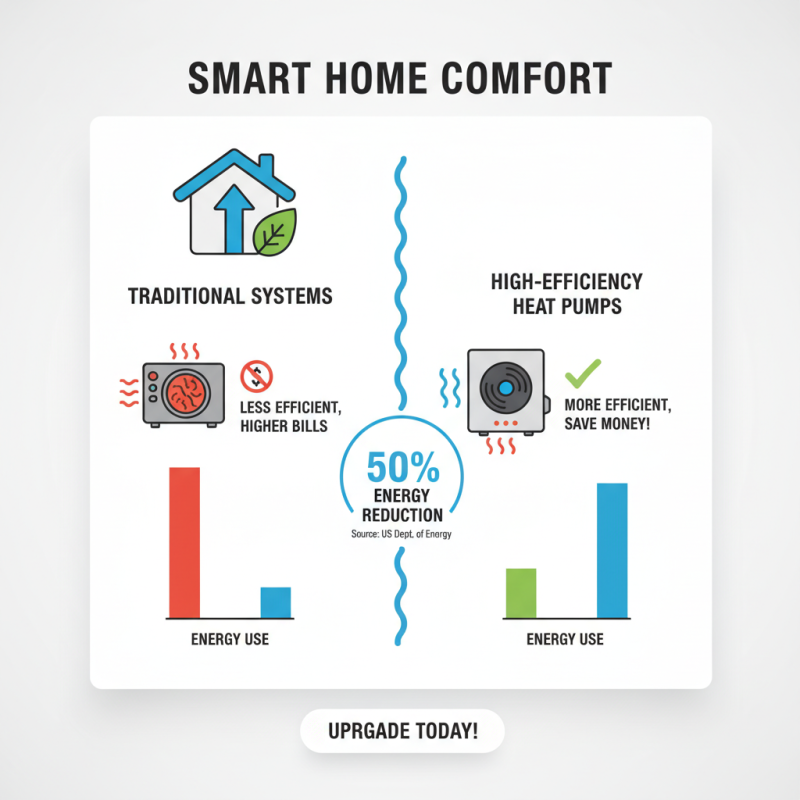
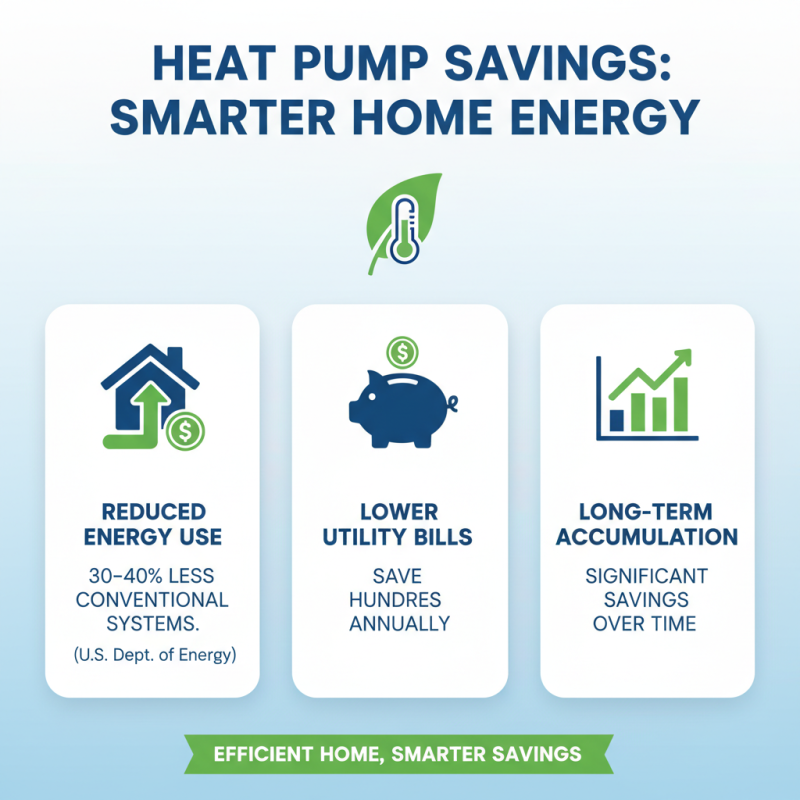
The efficiency of heat pumps plays a critical role in long-term savings for homeowners. According to the U.S. Department of Energy, efficient heat pumps can reduce energy usage by 30% to 40% compared to conventional heating systems. Homeowners can save hundreds on energy bills annually. Over time, these savings can accumulate significantly.
Moreover, using an efficient heat pump contributes to environmental benefits. The Environmental Protection Agency reports that switching to these systems can lower greenhouse gas emissions. For every ton of carbon dioxide saved, it is equivalent to planting over 11 trees each year. However, not all heat pumps are created equal. Homeowners might find it challenging to select the most efficient model. The upfront costs also pose a concern, leading some to overlook potential long-term advantages.
Despite these challenges, the benefits of improved efficiency are clear. Homeowners need to weigh initial expenses against future savings. In a world increasingly focused on sustainability, these choices matter. Investing in an efficient heat pump could help a household achieve both financial and ecological goals.