2026 How to Choose the Best Heat Pump Options for Your Home?
When considering heat pump options, homeowners often feel overwhelmed. The choices can seem endless. Whether upgrading or installing for the first time, making the right decision is crucial. Many factors come into play, from energy efficiency to climate suitability.
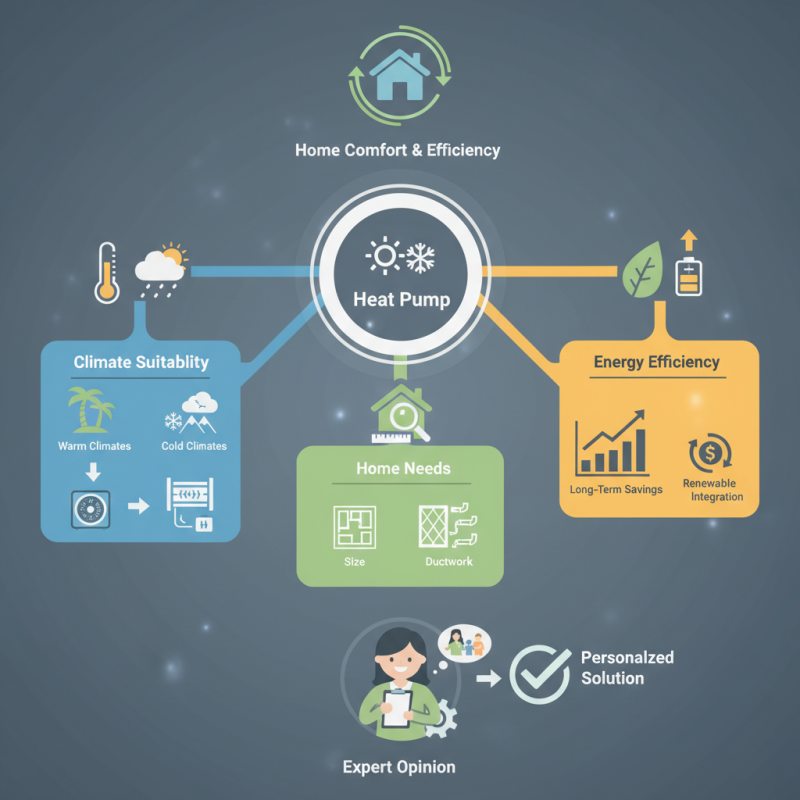
According to Dr. Emily Green, a noted expert in renewable energy, "The right heat pump can transform your home into a comfortable oasis." Her insights resonate with many homeowners navigating this landscape. Heat pump options vary widely, emphasizing the need for personalized solutions.
It’s essential to evaluate your home's specific needs. Factors like size, insulation, and local climate will influence your choice. Some might rush into a decision, only to find their system underperforms. Reflecting on these details can lead to a more effective and long-lasting investment. Prioritizing these considerations can ultimately enhance your home’s comfort and efficiency.
Understanding Heat Pumps: Types and Their Applications
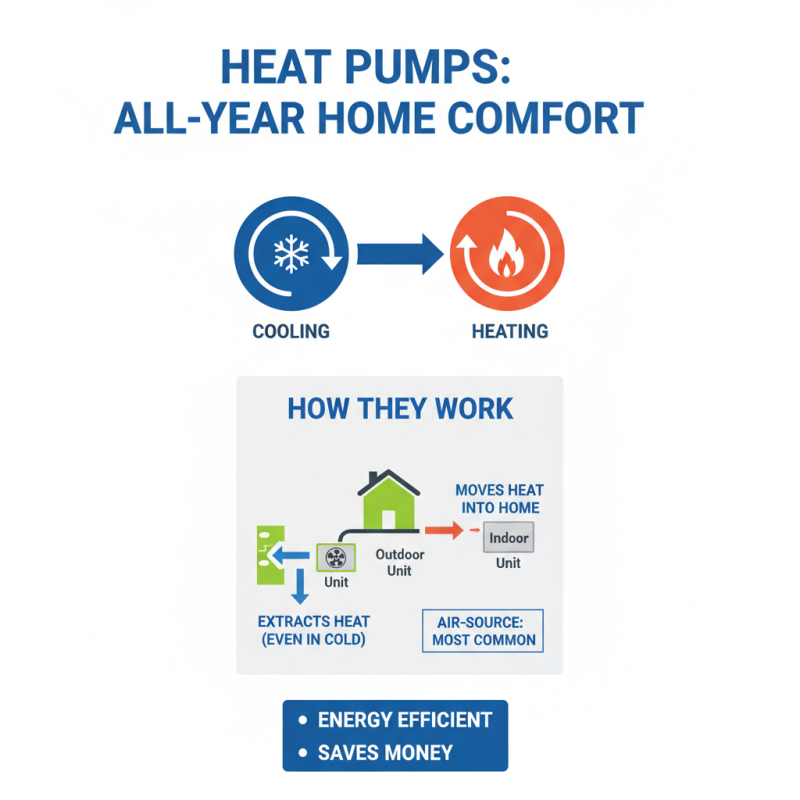
Heat pumps are versatile systems that can both heat and cool your home. Understanding the types of heat pumps available is crucial. Air-source heat pumps are the most common. They extract heat from the outside air, even in cold conditions. This method is efficient and can save energy costs.
Geothermal heat pumps use underground temperatures. They require installation of ground loops, which can be expensive upfront. However, they often pay off in the long run with lower operating costs. This type is perfect for areas with extreme temperatures, providing consistent heating and cooling.
You might consider the size of your home. A small apartment may benefit from a ductless mini-split system. These systems offer flexibility and can be tailored to individual rooms. Installation can become complicated. It's essential to evaluate your home’s insulation and energy efficiency before making a choice. Upgrading insulation can enhance overall performance.
Factors to Consider When Choosing a Heat Pump for Your Home
When choosing a heat pump for your home, consider several critical factors.
The size of the unit is crucial. A heat pump that is too small won't effectively heat or cool your space.
Conversely, an oversized unit can lead to higher energy costs and decreased efficiency. It's vital to perform a
proper load calculation to determine the right size. According to the U.S. Department of Energy, improper sizing can reduce heat pump efficiency by up to 30%.
Efficiency ratings are another important aspect. Look for units that meet industry standards,
such as the Seasonal Energy Efficiency Ratio (SEER) and Heating Seasonal Performance Factor (HSPF).
These ratings indicate how well the pump performs in various conditions. For example, a high-SEER unit can save homeowners up to
20% on energy bills compared to less efficient models. However, higher efficiency often comes at a higher upfront cost.
It’s essential to evaluate whether the long-term savings justify the initial investment.
Finally, consider your local climate. In colder regions, a heat pump with supplemental heating may be necessary.
Research shows that some models struggle to operate efficiently below freezing temperatures.
Homeowners should investigate options suitable for their environment. A poorly chosen heat pump can lead to discomfort and
increased utility bills. Weighing these factors carefully can lead to a more satisfying heating and cooling solution.
Evaluating Energy Efficiency Ratings for Heat Pumps
When choosing a heat pump, energy efficiency ratings are crucial. The Seasonal Energy Efficiency Ratio (SEER) and Heating Seasonal Performance Factor (HSPF) provide a snapshot of performance. For instance, a heat pump with a SEER of 16 or higher is considered efficient. The U.S. Department of Energy recommends a minimum HSPF of 8.2. Higher ratings can lead to significant savings on energy bills.
Yet, not all homes are suited for high-efficiency models. A home’s insulation, size, and climate affect its performance. In colder regions, a heat pump may struggle to maintain efficiency. According to the American Council for an Energy-Efficient Economy, poor insulation can lead to over 20% energy loss. Homeowners should consider these factors before making a choice.
Moreover, efficiency ratings aren't foolproof. Some models may claim high ratings but underperform in real conditions. User testimonials reveal issues with perceived efficiency. Awareness of local climate conditions is essential. A heat pump might not be the silver bullet for every home. Understanding the nuances allows for a more informed decision.
2026 How to Choose the Best Heat Pump Options for Your Home? - Evaluating Energy Efficiency Ratings for Heat Pumps
| Heat Pump Type |
Energy Efficiency Ratio (EER) |
Coefficient of Performance (COP) |
Heating Capacity (BTU/h) |
Refrigerant Type |
Estimated Annual Operating Cost ($) |
| Air Source Heat Pump |
15.0 |
3.5 |
30,000 |
R-410A |
1200 |
| Geothermal Heat Pump |
30.0 |
4.5 |
35,000 |
R-410A |
900 |
| Ductless Mini-Split Heat Pump |
20.0 |
4.0 |
18,000 |
R-32 |
1100 |
| Portable Heat Pump |
12.0 |
2.8 |
10,000 |
R-410A |
300 |
Installation and Maintenance Requirements for Heat Pumps
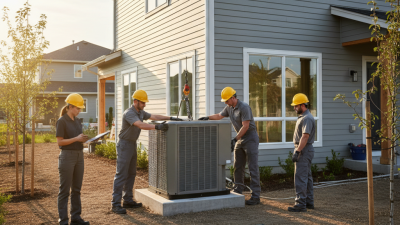
When considering heat pumps for home comfort, installation and maintenance are key. Proper installation ensures efficiency and longevity. Reports indicate that an estimated 70% of heat pump failures are linked to improper installation. Engaging qualified professionals can mitigate these risks. Ideally, the unit should be placed in a location with good air flow, avoiding obstructions that limit performance.
Maintenance is equally crucial. Regular inspections can prevent small issues from becoming major problems. A study found that homes with consistent heat pump maintenance see energy efficiency improve by up to 25%. It's vital to clean or replace filters monthly and check refrigerant levels at least twice a year. Neglecting these tasks can lead to decreased efficiency and higher energy costs.
Homeowners should be aware of the potential costs involved. An initial investment in installation may range from $3,000 to $8,000, depending on the system type. Maintenance services can also add up, which might deter some homeowners. Yet, the long-term savings on energy bills can offset these expenses.
2026 Heat Pump Options Analysis
Cost Considerations and Long-term Savings with Heat Pumps
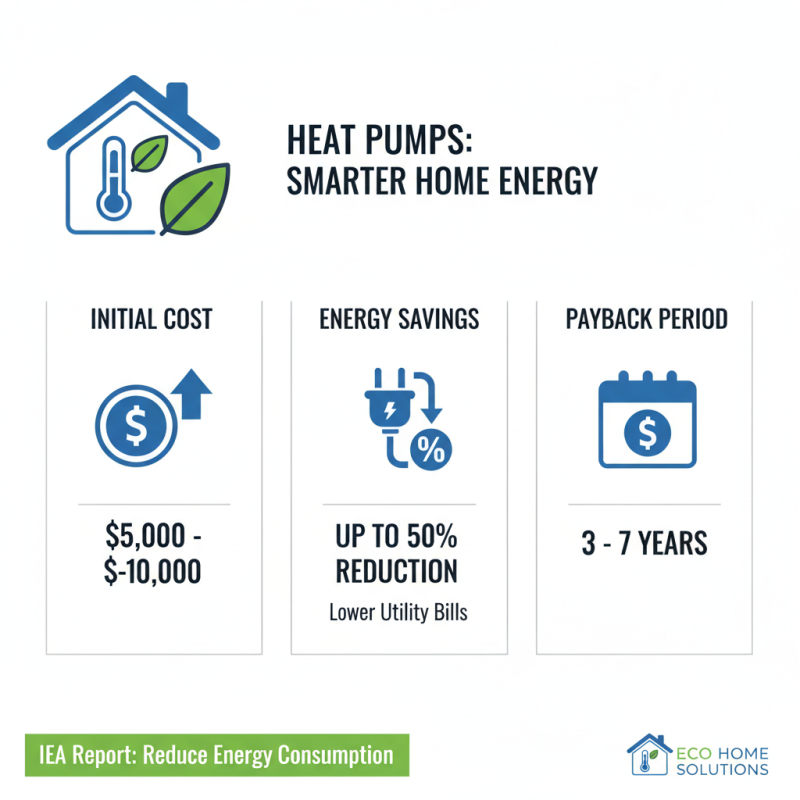
Heat pumps offer an intriguing balance between initial costs and long-term savings. According to a recent report by the International Energy Agency, heat pumps can reduce energy consumption by up to 50% when compared to traditional heating systems. This efficiency translates to lower utility bills, making them an attractive choice for homeowners. The average upfront cost of a heat pump installation ranges from $5,000 to $10,000. While this seems significant, the payback period is generally between 3 to 7 years based on yearly savings.
Homeowners often overlook maintenance costs when considering heat pumps. Regular servicing is crucial for efficiency. Failure to maintain the system can lead to a 10% drop in efficiency within a few years. Some homeowners report experiencing unexpected repair costs, which can impact financial planning. In contrast, many energy efficiency programs offer rebates that can alleviate initial expenses. This means that although upfront costs are high, long-term savings and incentives may well balance that out.
It's important to analyze local electricity and heating fuel prices. Variations can significantly impact the long-term savings equation. In regions with high electricity rates, heat pumps shine due to their efficiency. Yet, the benefits diminish in colder climates without proper scaling. Proper installation and sizing are critical factors that impact performance and savings. Without attention to these details, homeowners may not achieve optimal efficiency.