How to Maximize Heat Recovery for Energy Efficiency?
In today’s energy-conscious world, maximizing heat recovery is essential for enhancing energy efficiency. Effective heat recovery systems can capture and reuse thermal energy, thus reducing overall energy consumption. Industries and buildings can benefit significantly from implementing these strategies.
Many facilities, however, struggle to optimize their heat recovery processes. This often leads to wasted energy and higher operational costs. It’s important to analyze current systems critically. Addressing inefficiencies can yield substantial savings and environmental benefits.
Innovative technologies play a key role in improving heat recovery. From advanced heat exchangers to intelligent control systems, these solutions can contribute to a more sustainable future. Nevertheless, the implementation challenges should not be overlooked. Regular maintenance and staff training are also crucial for success. Recognizing these gaps can help organizations move toward greater energy efficiency.
Understanding Heat Recovery and Its Importance for Energy Efficiency
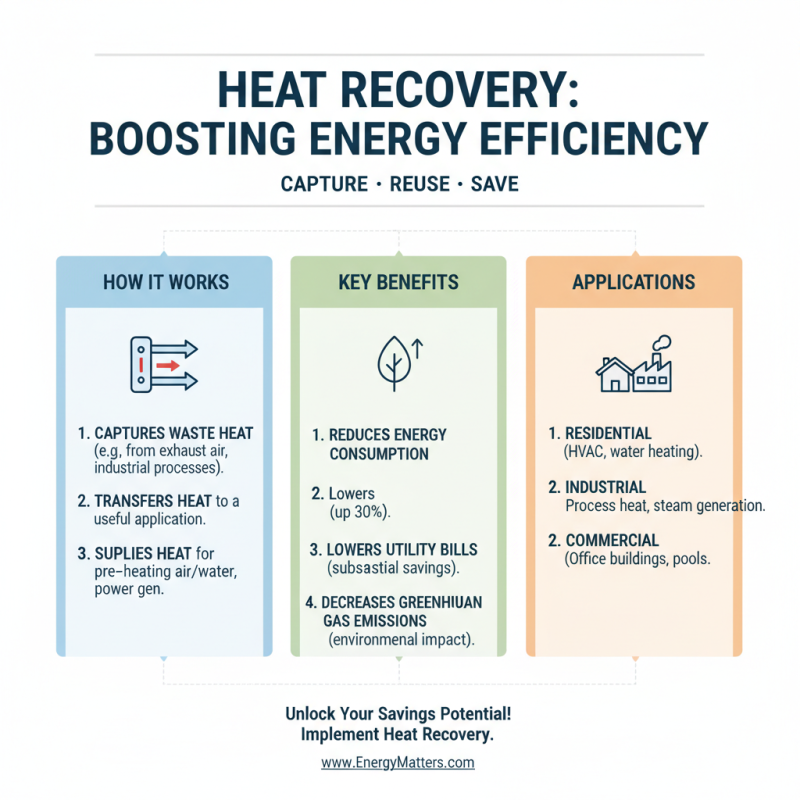
Heat recovery plays a crucial role in enhancing energy efficiency. Understanding how it works can lead to significant benefits for both residential and industrial applications. By capturing waste heat, systems can utilize it for heating water, spaces, or even for power generation. This not only reduces energy consumption but also lowers greenhouse gas emissions. The potential savings in utility bills can be substantial, yet many facilities fail to implement effective heat recovery systems.
Implementing heat recovery can be challenging. It requires a deep understanding of the building's energy flows. It also demands regular maintenance to ensure optimal performance. Systems might not operate at peak efficiency if not monitored continuously. Small leaks or mechanical issues can lead to significant energy losses. Therefore, proper training for staff is essential. Ensuring the team understands the technology helps maximize its potential. The importance of consistent evaluation cannot be overstated. Regular assessments help in identifying areas for improvement.
Many businesses overlook the importance of heat recovery. They focus on immediate costs rather than long-term savings. This short-sightedness may hinder their commitment to sustainability. Finding the right balance between initial investment and future returns is critical. It’s essential to reflect on existing practices and consider the benefits of heat recovery. Embracing this approach can lead to a more energy-efficient future for all.
Types of Heat Recovery Systems: A Comparative Analysis for Optimal Use
Heat recovery systems are essential for enhancing energy efficiency in various applications. These systems capture excess heat produced from industrial processes or HVAC systems. By repurposing this heat, they reduce energy waste and lower utility costs. Several types of heat recovery systems exist, each with its own advantages and limitations.
For instance, heat exchangers are commonly used in environments with a large temperature difference. They transfer heat between two fluids without mixing them. On the other hand, heat pumps can move thermal energy from one location to another, making them versatile for many applications. However, their efficiency can decrease in extreme temperatures, which is something to consider.
Tips: Regular maintenance of your heat recovery system is crucial. Clean filters and inspect components to ensure optimal performance. If you're considering a system upgrade, evaluate local climate conditions. This impacts the effectiveness of the heat recovery methods you choose. An understanding of these factors can help you make an informed decision, though it’s often overlooked. Remember, not every system will fit every scenario perfectly. Adapting to specific needs is key.
Key Metrics for Measuring Heat Recovery Efficiency in Industrial Settings
Heat recovery efficiency in industrial settings is critical for enhancing energy performance. Key metrics help assess this efficiency. The heat recovery rate is one such vital metric, measuring the percentage of energy captured from waste heat. According to the U.S. Department of Energy, effective heat recovery can save up to 30% of energy costs in industrial processes.
Another significant metric is the payback period for investments in heat recovery systems. Typically ranging from two to five years, this period indicates the time needed to recoup the initial investment through energy savings. For instance, a recent industry report highlighted that facilities employing heat recovery systems often experience a marked increase in return on investment, sometimes exceeding 15%.
Additionally, monitoring the temperature differential between supplied and recovered heat can provide insights into system performance. A smaller temperature gap may suggest inefficiencies. Continuous data collection and analysis of these key metrics can guide decision-makers. This focus helps determine whether existing systems need upgrades. Thus, prioritizing these metrics is essential for improving overall energy efficiency and sustainability in industries.
Maximizing Heat Recovery for Energy Efficiency
Implementing Heat Recovery Solutions: Strategies for Various Industries
Implementing heat recovery solutions can significantly enhance energy efficiency across various industries. In manufacturing, for instance, capturing waste heat from machinery can be repurposed to preheat incoming materials. This practice not only lowers energy costs but also reduces the carbon footprint. Retrofitting existing systems for heat recovery is a valuable step, yet it requires careful planning and analysis.
In the food and beverage sector, heat recovery from cooking processes can be utilized to warm water or generate steam. This leap towards sustainability can be challenging. Staff training and system maintenance become essential for success. Without regard for these aspects, even the best-designed systems can underperform.
Air conditioning systems also pose opportunities for heat recovery. Industry leaders often overlook this. Utilizing excess heat from AC units can provide warmth in adjacent spaces. Yet, implementing this requires upfront investment and long-term commitment. As industries evolve, the potential of heat recovery remains vast but not effortlessly achievable. Careful thought and practical adjustments are key to unlocking these benefits.
Real-World Case Studies: Successful Heat Recovery Projects and Their Outcomes
Heat recovery systems have shown impressive outcomes in various industries. For instance, a case study in a food processing plant highlighted that retrofitting a heat exchanger saved over 300,000 kWh annually. This represented approximately 20% of the facility's total energy consumption. The strategic recovery of heat from cooking processes significantly reduced operational costs. Such practical applications illustrate the tangible benefits of heat recovery.
In another case, a major textile manufacturer implemented a comprehensive heat recovery system. The initiative resulted in a staggering 40% reduction in energy use. The company recycled heat from drying machines, translating to a decrease in greenhouse gas emissions by over 600 metric tons annually. However, not all projects yield immediate benefits. Some face challenges in balancing initial investment costs with long-term savings. This underlines the importance of careful planning and analysis before implementation.
Industry reports indicate that sectors optimizing heat recovery can see energy efficiency gains between 15% and 30%. Continuous monitoring and adjustments are crucial for sustaining performance. Companies must be open to re-evaluating their systems regularly to maintain efficiency. This approach not only boosts energy savings but also promotes a culture of sustainability, aligning business goals with environmental responsibility.
How to Maximize Heat Recovery for Energy Efficiency? - Real-World Case Studies
| Project Location |
Industry Type |
Heat Recovery Technology Used |
Annual Energy Savings (MWh) |
Carbon Footprint Reduction (tons) |
Payback Period (Years) |
| City A |
Manufacturing |
Heat Exchangers |
500 |
250 |
4 |
| City B |
Food Processing |
Condensing Boilers |
800 |
400 |
3 |
| City C |
Textile |
Heat Recovery Ventilation |
300 |
150 |
5 |
| City D |
Pharmaceutical |
Heat Pumps |
650 |
325 |
4.5 |
| City E |
Chemical |
District Heating |
900 |
450 |
3.2 |