
What Are the Top Electrical Test Kits in 2026?
Choosing the right Electrical Test Kit in 2026 means matching its tools to the work, not chasing the longest feature list. A residential electrician may need a dependable multimeter, a non-contact voltage tester, and insulated leads. Industrial maintenance can call for a clamp meter or insulation tester as well. The right combination depends on the equipment, measurement range, and working environment.
Details matter. A clear display helps in a dim service panel. Probe guards, sturdy cases, and replaceable leads can make routine checks less frustrating. Check the manufacturer’s specifications, safety ratings, and calibration guidance before comparing kits. A low price may look appealing, but missing accessories or unclear documentation can change the real value. Not every kit fits.
This guide will compare leading options by measurement capability, build quality, usability, and value. It will also consider who each kit suits, from apprentices assembling a first toolbox to experienced technicians replacing worn equipment. Ratings and included accessories can vary by model, so verify the exact package before buying. One limitation deserves attention: no single kit covers every electrical task. That sounds obvious, yet product pages can make broad claims feel simple. Use instruments only within their stated ratings and follow their instructions. A careful comparison helps narrow the choice; it cannot replace sound training or a properly planned test.
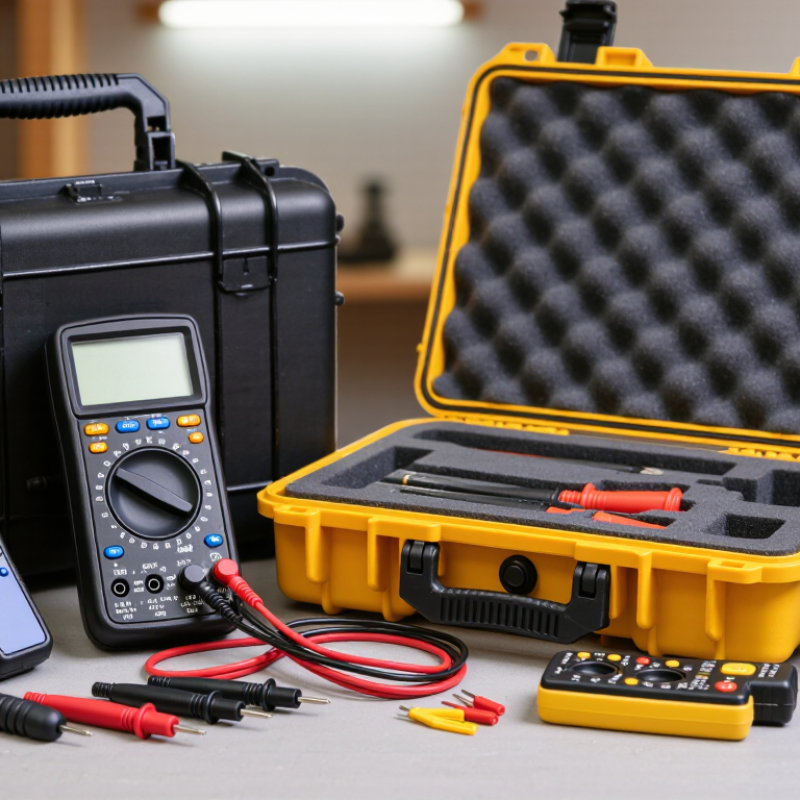
Table of Contents [Hide]
What an Electrical Test Kit Measures and Typically Includes
Electrical test kits help technicians check whether circuits are energized, correctly connected, and operating within expected limits. A typical kit may include a digital multimeter, a non-contact voltage detector, and insulated test leads. Some kits add a clamp meter for current readings or an insulation resistance tester for cables and motors. Small details matter. Probe ratings, intact insulation, and measurement categories affect what a tool can safely test.
A multimeter commonly measures AC and DC voltage, resistance, and continuity. Many models also measure current, capacitance, or frequency. Continuity mode can reveal a broken conductor, while resistance checks should be made with power removed. A clamp meter measures current around one conductor without opening the circuit, but positioning matters. Voltage detectors provide a quick indication, not a precise reading. That distinction is easy to forget.
Before testing, confirm the instrument’s rating suits the circuit and inspect leads for cuts or loose fittings. Follow the manual and site procedures, and use appropriate protective equipment. Readings can mislead when the wrong mode is selected, batteries are weak, or contact is poor. Even a complete kit cannot replace training or checking that the meter works before and after a live-circuit test.
What Are the Top Electrical Test Kits in 2026? - What an Electrical Test Kit Measures and Typically Includes
| Kit type | What it measures or checks | Typical included instruments and accessories | Common applications | What to verify before choosing |
|---|---|---|---|---|
| Electrical installation tester kit | Insulation resistance, continuity, loop impedance, prospective fault current, and residual-current device (RCD) operation, depending on the instrument. | Installation tester, test leads, probes, clips, mains test cord, and a carrying case; some kits include an RCD adapter or remote probe. | Verification and troubleshooting of fixed electrical installations. | Supported tests, applicable local standards, test voltage options, lead compatibility, and the instrument’s measurement category and safety ratings. |
| Digital multimeter and clamp meter kit | Voltage, resistance, continuity, and—on many meters—current; a clamp meter measures current around a conductor without disconnecting it. Capabilities vary by model. | Digital multimeter, clamp meter, test leads, probes, current clamp, and storage case; some sets add temperature or flexible-current accessories. | General electrical maintenance, circuit checks, and current measurements in accessible conductors. | AC/DC functions, current range and clamp type, continuity response, lead condition, and appropriate CAT and voltage ratings for the work location. |
| Insulation resistance tester kit | Insulation resistance between conductors or between a conductor and earth, using a selected DC test voltage. Some models also measure voltage and continuity. | Insulation tester, test leads, probes, crocodile clips, and case; optional accessories may include a remote probe or guarded lead. | Assessing insulation condition in cables, motors, appliances, and electrical installations when suitable for the equipment under test. | Available test voltages, resistance range, discharge and safety functions, and whether connected electronics must be isolated before testing. |
| Earth ground resistance tester kit | Earth-electrode or grounding-system resistance; supported methods may include 3-pole or 4-pole testing, selective testing, or clamp-based measurements. | Ground resistance tester, test leads, auxiliary stakes and connecting cables for stake methods, and a carrying case; clamp accessories depend on the method. | Testing grounding electrodes and grounding systems at buildings, sites, and utility installations. | Supported test methods, lead and stake length, soil and site conditions, and whether the method suits an isolated electrode or an interconnected system. |
| Voltage and circuit troubleshooting kit | Presence or absence of voltage, continuity, polarity, and basic outlet wiring conditions, depending on the tester and accessories. | Two-pole voltage tester or multimeter, proving unit where supplied, outlet tester, probes, and case; some kits include a non-contact voltage detector. | Initial fault-finding and basic checks on outlets, circuits, and electrical equipment. | Test functions, voltage range, indication method, proving procedure, and the limits of simple outlet testers for identifying wiring faults. |
| Appliance safety tester kit | Depending on the tester: protective-earth continuity, insulation resistance, leakage or touch current, and functional checks. | Appliance safety tester, test leads, equipment socket or adapters, and case; some kits include a remote probe or barcode accessories. | Safety testing of portable electrical equipment in workplaces and service environments. | Supported appliance classes, test sequence, leakage measurement method, regional requirements, and compatibility with the equipment’s plug and supply. |
Kit contents and functions vary by model and region. Select instruments with safety ratings appropriate to the measurement point, and follow the instrument instructions and applicable electrical-safety procedures.
