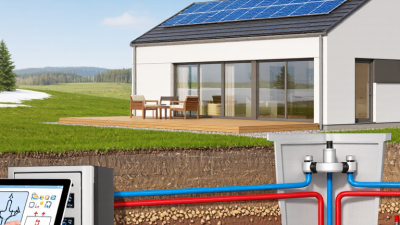
Why Choose Geothermal Heating for Your Project?
Choosing geothermal heating is not simply a decision about replacing a boiler. It is a long-term design choice involving soil conditions, building loads, installation quality, and future energy costs. A geothermal heat pump transfers heat between a building and the ground through buried pipe loops. In winter, the system draws relatively stable underground heat. In summer, it reverses the process.
Jay Egg, a geothermal educator and consultant, describes the concept clearly: “The ground is a giant thermal battery.” That image matters. Beneath a landscaped yard, plastic piping can quietly exchange heat with the earth while indoor temperatures remain steady. Unlike outdoor-air systems, geothermal heating is less exposed to sudden temperature swings. It can also reduce on-site combustion and support lower operating emissions, especially when paired with cleaner electricity.
The strongest projects begin with measured evidence. Designers should assess drilling access, groundwater conditions, insulation levels, ductwork, and the building’s hourly heating demand. A small home may need only a compact loop field. A larger facility could require several boreholes and detailed thermal modeling. Poor sizing remains a real weakness. So does assuming every site offers the same savings.
It is not magic.
However, a properly engineered system can deliver quiet, durable heating with fewer moving parts outdoors. Owners should compare installation costs, maintenance plans, local incentives, and expected service life. Geothermal heating deserves attention because it connects comfort with practical energy planning, not because it promises effortless perfection.
What Geothermal Heating Is and How It Works
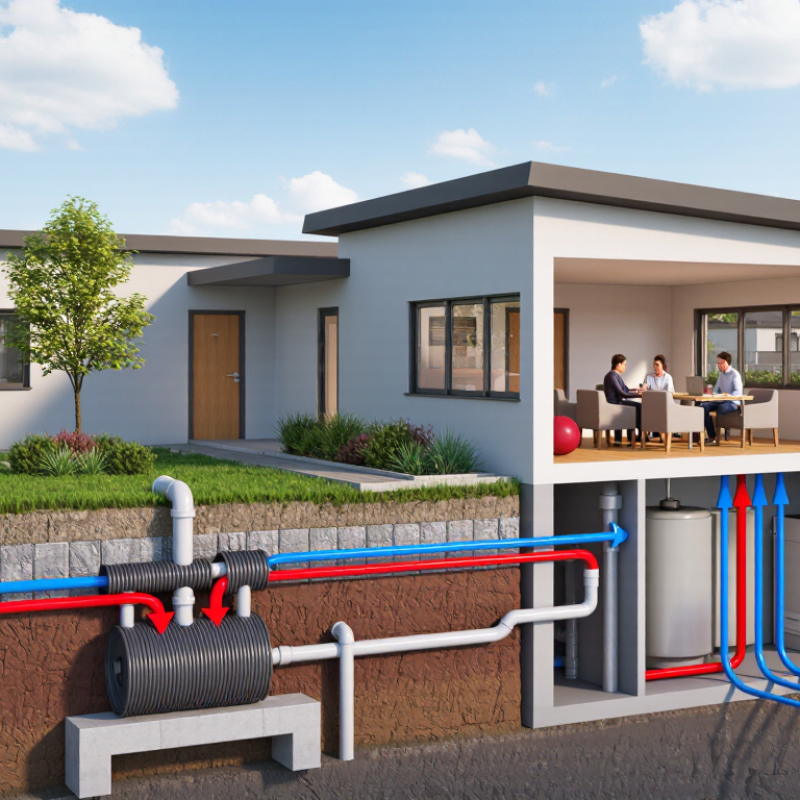
Geothermal heating uses the steady temperature beneath the ground to warm a building. Unlike outdoor air, underground temperatures change slowly throughout the year. A buried loop carries water or a water-based fluid through soil or rock. The loop may run horizontally across a property or vertically inside drilled boreholes.
The fluid absorbs low-grade heat from the ground. Inside the heat pump, a refrigerant transfers that heat through an evaporator, compressor, condenser, and expansion valve. The compressor raises the refrigerant’s temperature. The condenser then releases heat into underfloor pipes, radiators, or air ducts.
It works in reverse.
In practice, performance depends on careful site assessment. A qualified designer checks soil conditions, available land, drilling access, heat loss, and local regulations. Horizontal loops need space. Vertical loops need drilling equipment and accurate ground data. Poor sizing can cause slow heating, higher electricity use, or uncomfortable rooms. That part matters.
The system still needs electricity for its pumps and compressor. Its efficiency improves when the building has good insulation and lower-temperature heat emitters. Existing radiators may work, but not always at their best. I would not treat every property as a perfect geothermal candidate. A detailed heat-loss calculation should guide the design. Even small installation errors can affect flow rates and long-term reliability. Maybe not perfect. That is why qualified installation and measured commissioning remain important.
Key Components of a Geothermal Heating System
Geothermal heating moves energy between your building and the ground. Its main components must work as one system. The ground loop comes first. It uses buried high-density pipes filled with water and approved antifreeze. Horizontal trenches suit larger sites, while vertical boreholes fit compact properties. Soil conditions, drilling depth, and local temperatures affect the design.
The heat pump is the system’s working center. A ground-side heat exchanger absorbs low-temperature heat. The compressor raises that heat to a useful level. A second exchanger transfers it to water or indoor air. Hydronic systems feed underfloor pipes, radiators, or fan coils. Air systems use ductwork. Circulation pumps, expansion vessels, filters, and pressure gauges support safe operation. A buffer tank can reduce frequent cycling, although it is not needed in every project.
Controls connect these parts. Outdoor sensors can adjust supply temperature as weather changes. Room thermostats then fine-tune comfort. A qualified designer should calculate heat loss before selecting equipment. Guessing from floor area alone can create poor performance. I have seen attractive installations suffer because loop spacing and flow rates were treated as minor details. They are not minor. Regular checks should include pressure, fluid concentration, filters, and electrical connections. Maintenance needs vary. Ground conditions can be unpredictable. That limitation deserves honest planning.
Project Conditions That Suit Geothermal Heating
Project conditions determine whether geothermal heating is a practical investment. The strongest candidates have stable ground temperatures, suitable drilling access, and enough land for loop installation. New buildings often offer better opportunities because boreholes and pipework can be coordinated before foundations are completed. Existing properties may still work, but retrofitting can disturb landscaping, paving, or occupied spaces.
The building also needs a clear heating-load assessment. A well-insulated structure with low-temperature floor heating usually matches geothermal performance well. Older buildings with drafty walls may need insulation upgrades first. The U.S. Department of Energy reports that geothermal heat pumps can be three to six times more efficient than conventional heating systems. The U.S. Environmental Protection Agency also reports potential electricity savings of 25% to 50%. These figures are useful, but they are not guarantees. Local soil, drilling depth, system design, and electricity prices can change the result. A careful feasibility study matters more than a sales estimate.
Tips: Test the ground before final design. Request thermal-response testing for larger projects. Compare open-loop and closed-loop options with a qualified engineer. Leave room for plant access and future maintenance. I have seen projects underestimate drilling logistics. That mistake is expensive. Also, verify the seasonal heating load, not only the building’s peak demand. A smaller system may reduce costs, but poor sizing can weaken comfort and efficiency.
Energy, Cost, and Environmental Benefits
Why Choose Geothermal Heating for Your Project?
Geothermal heating uses the ground as a steady thermal reservoir. The U.S. Department of Energy reports that geothermal heat pumps can deliver three to six units of heat for each electricity unit used. They may also reduce heating and cooling energy consumption by 25% to 50%. The benefit feels practical during winter: indoor temperatures remain stable while the outdoor air becomes sharply colder. Quiet operation matters too. The loop stays quiet.
Costs require a wider view than equipment price. Installation can be expensive because excavation or drilling depends on soil, access, and system depth. However, the U.S. Department of Energy identifies lower operating costs as a major life-cycle advantage. A properly designed system can reduce monthly energy demand and limit exposure to fuel-price changes. Maintenance is often simpler than combustion-based heating, with no burner, chimney, or fuel delivery. Still, poor sizing can erase expected savings.
Environmental gains are also measurable. The International Energy Agency reports that building operations represent a significant share of global energy use and emissions. Geothermal systems can reduce direct combustion emissions because heating occurs without burning fuel onsite. Their overall impact still depends on electricity generation, refrigerant management, and drilling practices. This is where project reviews should remain honest. Local conditions may disappoint early estimates. Independent load calculations, ground testing, and verified contractor experience provide stronger evidence than optimistic payback claims.
| Evaluation Dimension | Typical Geothermal Heating Value | Comparison or Calculation | Project Considerations |
|---|---|---|---|
| Heating efficiency | A ground-source heat pump commonly delivers approximately 3 to 6 units of heat for every unit of electricity consumed, represented by a coefficient of performance (COP) of about 3.0 to 6.0. | This is substantially higher than electric resistance heating, which has an operating COP of approximately 1.0. | Actual performance depends on ground temperature, system design, entering-water temperature, indoor set points, and equipment operation. |
| Illustrative electricity use | For 10,000 kWh of useful annual heat, a system operating at COP 4 would require approximately 2,500 kWh of electricity. | Electric resistance heating would require approximately 10,000 kWh for the same useful heat output, so the geothermal example uses about 75% less electricity. | This is a normalized calculation rather than a guaranteed project result. The actual reduction varies with the existing heating system and seasonal load. |
| Illustrative annual energy cost | At an electricity rate of $0.15 per kWh, the COP 4 example would cost approximately $375 per year for the electricity used to provide 10,000 kWh of heat. | Electric resistance heating would cost approximately $1,500 under the same assumptions, producing an illustrative annual difference of $1,125. | Cost outcomes depend on local electricity prices, heating demand, auxiliary heat use, maintenance, and any time-of-use tariff. |
| Operating cost potential | Because geothermal systems move heat rather than generate it directly, they can reduce heating energy costs compared with electric resistance and some combustion-based systems. | The greatest savings generally occur where heating demand is high, electricity prices are moderate, and the system is properly sized and commissioned. | Capital cost, drilling or trenching conditions, financing, and local fuel prices should be included in a whole-life cost assessment. |
| Carbon emissions | Emissions depend mainly on the electricity grid and the system's seasonal efficiency. Geothermal heating has no on-site combustion emissions. | In an illustrative grid scenario of 0.40 kg CO₂ per kWh, the COP 4 example produces about 1,000 kg CO₂ for 2,500 kWh of electricity, compared with 4,000 kg CO₂ for 10,000 kWh used by resistance heating. | The environmental advantage is greater on lower-carbon grids and can improve as the electricity supply becomes cleaner. Local grid factors should be used for project reporting. |
| Renewable energy compatibility | Geothermal heat pumps can operate with electricity from solar, wind, hydro, or other low-carbon sources. | Using lower-carbon electricity reduces the emissions associated with each unit of delivered heat without changing the ground-loop system. | Solar generation, storage, and grid-interconnection assumptions should be evaluated separately from the heat-pump design. |
| Heating reliability | Ground temperatures are generally more stable than outdoor air temperatures, allowing the system to maintain consistent heat-source conditions through the heating season. | Stable source temperatures can support predictable seasonal efficiency compared with systems that extract heat from very cold outdoor air. | Correct ground-loop sizing, thermal response analysis, controls, and backup-heating provisions are essential for dependable performance. |
| Equipment and ground-loop life | Indoor heat-pump equipment is commonly designed for service lives of roughly 20 to 25 years, while properly installed buried ground loops can remain usable for 50 years or longer. | The longer life of the ground loop can spread excavation or drilling costs over multiple equipment replacement cycles. | Service life depends on installation quality, soil conditions, corrosion protection, maintenance, operating hours, and replacement practices. |
| Space and site requirements | Horizontal loops generally require more land area, while vertical boreholes can reduce the surface footprint but may require drilling. | Both configurations use the same basic principle: exchanging heat with the ground through a closed-loop or open-loop system. | Site geology, available land, groundwater regulations, access for drilling equipment, and local permitting can strongly affect feasibility and cost. |
| Best-fit project profile | Geothermal heating is often most attractive for buildings with substantial year-round heating or cooling demand and a long ownership or operating horizon. | Higher annual energy use can provide more opportunity to recover the initial installation cost through reduced operating expenses. | A project-specific feasibility study should compare lifecycle cost, energy demand, emissions, site conditions, incentives, and maintenance requirements. |
Planning, Installation, and Long-Term Maintenance Considerations
Why Choose Geothermal Heating for Your Project?
Planning a geothermal heating system starts with the building, not the equipment. Review insulation, window quality, floor area, and local soil conditions. A heat-loss calculation helps size the system accurately. Oversizing can increase costs and shorten cycling efficiency. Undersizing may leave rooms cold during severe weather. That detail matters.
Installation planning requires careful ground-loop design. Horizontal loops need open land and suitable excavation depth. Vertical loops suit smaller sites but require drilling access and specialist testing. Before construction, confirm permits, drainage routes, underground utilities, and groundwater conditions. The installation team should document pipe pressure tests and connection points. Poor records create expensive confusion later. Some projects also need temporary heating during excavation, which is easy to overlook.
Long-term maintenance is usually manageable, but it is not maintenance-free. Inspect filters regularly, especially during dusty renovation work. Check circulation pumps, pressure readings, antifreeze levels, and indoor airflow each year. Keep service records with dates, readings, and replaced parts. A neglected filter can reduce comfort before a major fault becomes obvious. I would also review the system after its first winter. Real operating data may reveal uneven temperatures or incorrect controls. Not every design performs perfectly on paper. Honest adjustments often protect efficiency, comfort, and equipment life.
Related Posts
-
7 Geothermal Heating Tips for Global Buyers
-
How to Choose a Geothermal Heating System?
-
How to Choose the Right Geothermal Unit for Your Home?
-
What is Heat Pump Technology and How Does It Work?
-
Why Is Geothermal Heating the Ideal Choice for Sustainable Home Energy
-

Geothermal Pumps at China Import and Export Fair What to Expect?