
Best Waste Heat Recovery System Supplier in China?
Choosing the best waste heat recovery system supplier in China starts with one question: where does your process lose usable heat? A kiln exhaust stack, boiler flue, compressor discharge, and hot wastewater each need a different solution. A supplier should ask for operating temperatures, flow rates, operating hours, and the planned heat use before recommending equipment. A glossy brochure is not enough. Real data matters.
Professor David A. Reay, an established author on heat recovery, offers a useful principle in his published work: recovered heat must match a practical demand. In other words, heat has little value if no process can use it. For a factory, that might mean preheating boiler feedwater or supplying hot water to a nearby production line. The right waste heat recovery system depends on this match, not just its quoted efficiency. Ask suppliers for heat-balance calculations, expected performance under changing loads, material specifications, and references from comparable installations. Request clear details on commissioning, maintenance, and spare parts, too. Check the assumptions behind any projected savings.
China has a broad supplier base, but product claims and project experience can vary. Compare technical evidence, not only price. A site visit or a call with an existing customer may reveal issues a proposal leaves out. Even careful checks cannot remove every uncertainty; process conditions change, and estimates can miss. That is worth acknowledging. A dependable supplier will explain those limits, document the design basis, and revise recommendations when the measurements do not support them.
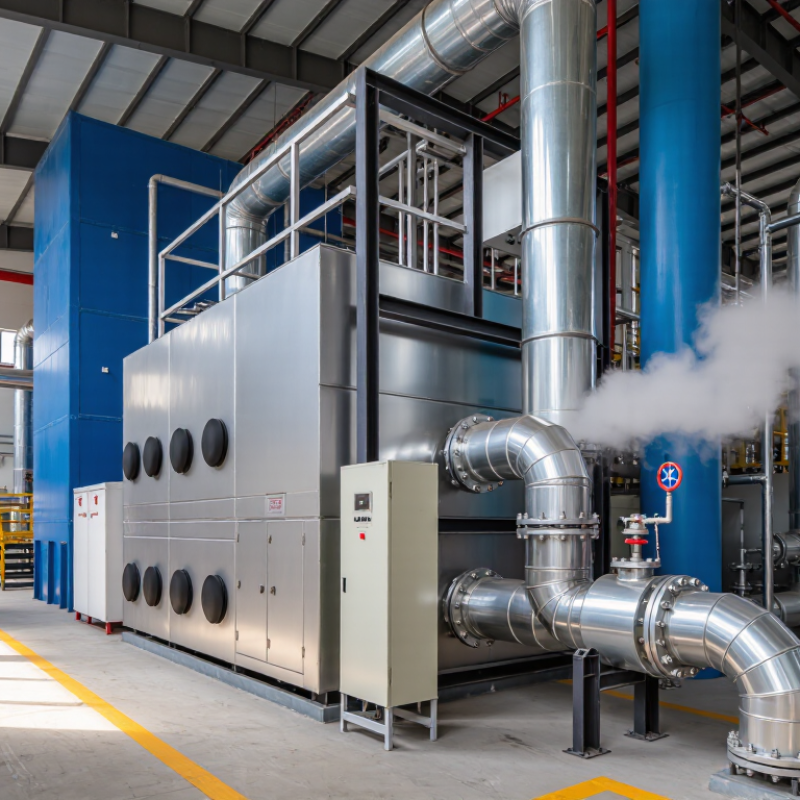
Table of Contents
[Hide]
Waste Heat Recovery Systems: Definition and Core Components
A waste heat recovery system captures heat that would otherwise leave a process through exhaust gas, cooling water, or hot equipment surfaces. It transfers that energy for useful work, such as preheating boiler feedwater or supplying heat to another production step. In a factory, this might mean routing warm flue gas through a heat exchanger before it reaches the stack. The exact design depends on temperature, flow rate, and how steadily the equipment operates.
The heat exchanger is usually the central component. It moves heat between two streams without mixing them. Pipes or ducts carry the streams, while pumps or fans maintain circulation. Some systems also include a heat-transfer fluid, a storage tank, or equipment that converts heat into electricity. Sensors and control valves adjust operation as conditions change. Small details matter. Dust, corrosion, or changing exhaust temperatures can reduce performance over time.
A sound supplier assessment should look beyond a headline efficiency figure. Ask how the system handles your actual operating data, maintenance access, and shutdown periods. A site survey is useful; a brochure cannot reveal every constraint. Even a carefully designed unit may recover less heat than expected if production schedules fluctuate. That is an inconvenient truth, but worth discussing early.
| Best Waste Heat Recovery System Supplier in China? - Waste Heat Recovery Systems: Definition and Core Components | |||
|---|---|---|---|
| Category | System Element | Definition or Function | Practical Selection Considerations |
| Definition | Waste heat recovery system | Equipment that captures heat from an exhaust or process stream and transfers it to a useful application, such as heating air, water, process fluids, or generating steam. | Assess the source temperature, flow rate, operating schedule, heat demand, and acceptable pressure drop before selecting a system. |
| Heat source | Flue gas or hot exhaust | Common sources include furnaces, boilers, kilns, engines, and industrial process exhausts. | Check temperature variation, dust or corrosive constituents, moisture, and whether the exhaust must remain above a minimum discharge temperature. |
| Core component | Heat exchanger | Transfers heat between hot and cold streams while keeping them separated in indirect systems. Common designs include shell-and-tube, plate, and finned-tube exchangers. | Match the design to the fluids, temperature and pressure conditions, fouling tendency, cleaning requirements, and available space. |
| Core component | Heat-transfer surface | Provides the area through which heat moves. Fins may increase surface area on the gas side, where heat transfer is often less effective than in liquids. | Consider material compatibility, corrosion risk, thermal expansion, access for inspection, and the effect of deposits on performance. |
| Core component | Circulation and flow equipment | Pumps, fans, dampers, and associated piping or ductwork move the source and receiving streams through the system. | Review required flow rates, pressure losses, control range, auxiliary power use, and integration with existing equipment. |
| Core component | Controls and instrumentation | Temperature, pressure, and flow instruments support monitoring and control of heat recovery operation. | Confirm that operating limits, alarms, bypass arrangements, and shutdown sequences are defined for the connected process. |
| System type | Economizer | Uses boiler flue-gas heat to preheat feedwater or, in some applications, combustion air. | Check water-side conditions, flue-gas composition, fouling potential, and the boiler manufacturer's operating limits. |
| System type | Recuperator | Transfers heat continuously from hot exhaust to incoming combustion air or another process stream, typically through a separating wall. | Evaluate temperature limits, leakage requirements, pressure balance, materials, and expected operating conditions. |
| System type | Heat-pipe exchanger | Uses sealed heat pipes to transfer heat between separate hot and cold sections without directly mixing the streams. | Confirm the design suits the temperature range, installation orientation, stream cleanliness, and required separation between streams. |
| Supplier evaluation | Engineering and sizing | A qualified supplier should base equipment sizing on documented process conditions and the intended heat-use application. | Request stated design assumptions, heat and mass balance, pressure-drop estimates, materials, and operating limits. |
| Supplier evaluation | Performance documentation | Expected performance depends on actual source conditions, heat demand, fouling, and system operation; it should not be treated as a universal fixed value. | Ask for the calculation basis, test or verification method, guaranteed conditions, and exclusions that could affect performance. |
| Supplier evaluation | Manufacturing, testing, and service | Quality procedures, inspection records, commissioning support, and access to replacement parts can affect long-term system reliability. | Review applicable codes and inspection requirements, documentation, warranty terms, maintenance access, and the scope of after-sales support. |
Related Posts
-
China Top 10 Waste Heat Recovery System Manufacturers
-
Top 10 Benefits of Waste Heat Recovery System for Energy Efficiency
-

Best Orc Turbine Solutions for Global Buyers?
-
What Are the Best Types of Geothermal Systems from China?
-
How to Choose Energy Efficient Heating for Global Buyers?
-

10 Best Heat Recovery Systems for Energy Efficiency in Your Home?
