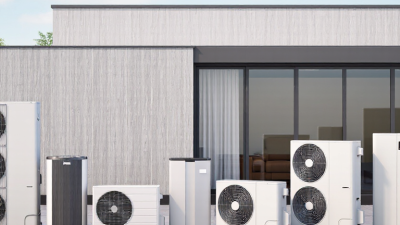
7 Tips for Choosing the Right Thermo Pump?
Choosing the right thermo pump is not a simple matter of comparing prices. A suitable model must match your building, climate, water system, and daily heating demand. I learned this after seeing a high-efficiency unit perform poorly in a poorly insulated house. The equipment was not the only problem.
The International Energy Agency’s Executive Director, Dr. Fatih Birol, has described heat pumps as “a key technology in the global clean energy transition.” That authority matters, but it should not replace careful evaluation. A thermo pump can reduce energy use, yet its real performance depends on installation quality, outdoor temperature, controls, and maintenance. Marketing labels rarely tell the complete story.
Small details matter.
This guide, “7 Tips for Choosing the Right Thermo Pump,” examines the decisions buyers often overlook. We will consider heating capacity, seasonal efficiency, noise, refrigerant choice, operating temperature, installer expertise, and long-term service support. For example, a unit rated at 12 kilowatts may be oversized for a well-insulated home, causing frequent cycling and unnecessary wear. A cheaper model may also become expensive when replacement parts are difficult to obtain.
There is no perfect selection. Your first estimate may be wrong. Even experienced professionals must review heat-loss calculations and local weather data. Reliable advice should come from documented testing, qualified installers, and transparent warranty terms. Use these seven tips to ask sharper questions, compare realistic operating costs, and choose a thermo pump that fits your property rather than merely impressing you on paper.

Define the Thermo Pump’s Intended Heating and Cooling Tasks
7 Tips for Choosing the Right Thermo Pump
Define the Thermo Pump’s Intended Heating and Cooling Tasks
Before selecting a thermo pump, define its exact heating and cooling duties.
Tip 1: Record the target temperatures, fluid type, and required flow rate.
Tip 2: Measure the real thermal load, not only the equipment label. A workshop may need heating during startup and cooling during continuous operation.
Tip 3: Check whether the pump must switch between heating and cooling modes. Frequent changes can affect controls, efficiency, and service life.
Tip 4: Review the operating temperature range carefully. Some systems face cold mornings, hot rooms, or sudden process changes.
Tip 5: Match the pump’s capacity to the highest realistic demand. Oversizing may increase energy use and cause unstable cycling. Undersizing can leave materials underheated or equipment overheated. One estimate can still be wrong. Recheck it with measured site data.
Tip 6: Confirm fluid compatibility, pressure limits, and connection requirements with technical documents. Experienced technicians also inspect insulation, ventilation, and drainage before installation.
Tip 7: Consider duty cycles and maintenance access. A pump running twelve hours daily needs different planning from an occasional laboratory unit. Keep space around filters, valves, and electrical controls. Small details matter. If the intended task changes later, the original selection may no longer remain reliable.
Match Pump Capacity to Building Size and Operating Conditions
7 Tips for Choosing the Right Thermo Pump?
A thermo pump should match the building’s actual heating and cooling load. Floor area alone cannot provide a reliable answer. A well-insulated 200-square-meter home may need less capacity than an older, smaller property. Check wall insulation, window quality, ceiling height, air leakage, and local design temperatures.
Peak conditions matter. Cold mornings, hot afternoons, and frequent door opening can raise demand sharply. Ask a qualified installer to complete a room-by-room load calculation. In practice, oversizing is not always safer. An oversized pump may cycle frequently, waste energy, and create uneven indoor temperatures. Too small is also risky. It may run continuously during extreme weather.
Operating conditions deserve equal attention. Review the required water temperature, outdoor temperature range, and heating system type. Underfloor heating usually works with lower water temperatures than older radiators. That difference affects capacity and efficiency. Check performance data at realistic conditions, not only the best laboratory rating. Look for output figures at your region’s winter temperature.
Leave room for judgment. Simple sizing rules are useful for early estimates, but they can mislead. Ask for written calculations, commissioning records, and clear maintenance guidance. A professional should explain expected output, backup heating needs, noise levels, and defrost behavior. Small details matter. Keep records of indoor temperatures and energy use during the first season. Those observations can reveal whether the selected capacity truly suits the building.
7 Tips for Choosing the Right Thermo Pump: Match Pump Capacity to Building Size and Operating Conditions
Estimated nominal heating capacity required for different building sizes under mild, moderate, and cold design conditions. Values are based on typical design heat-loss ranges of approximately 80–160 W/m²; a professional heat-loss calculation is required for final equipment selection.
Larger buildings and colder operating conditions require greater pump capacity. Select a unit that can meet the design load at the expected outdoor temperature without excessive oversizing.
Compare Energy Efficiency Ratings and Long-Term Operating Costs
7 Tips for Choosing the Right Thermo Pump
Tip 1: Compare efficiency ratings before comparing purchase prices. Check the seasonal efficiency rating, heating coefficient of performance, and cooling performance. A higher rating usually means less electricity use during normal operation. However, test conditions may differ from your home. Ask for data based on your local climate, not only showroom figures.
Tip 2: Estimate long-term operating costs with real numbers. Record your current electricity rate, expected annual running hours, and the system’s seasonal consumption. A simple calculation can reveal whether a cheaper unit becomes expensive after several winters. I once focused too heavily on the initial price. That was a mistake. Maintenance, filter replacement, and possible repairs also affect ownership costs.
Tip 3: Inspect performance at low outdoor temperatures. Some thermo pumps lose capacity during freezing weather, which can increase backup heating costs. Request the heating output at several temperatures, such as 7°C, 0°C, and -10°C. Compare those figures with your household’s actual needs. An efficient unit may still perform poorly if it is oversized, poorly installed, or connected to weak insulation. Ask a qualified installer to assess airflow, pipe length, controls, and electrical demand. Efficiency ratings matter, but installation quality can quietly decide the final bill.
Check Installation Requirements, Controls, and System Compatibility
7 Tips for Choosing the Right Thermo Pump
Begin with the installation site, not the product brochure. Check available space, pipe routes, ventilation, drainage, and electrical capacity. A narrow service area can make routine filter cleaning frustrating. Confirm the required flow rate, operating temperature, pressure limits, and connection sizes. Local climate also matters, especially where freezing conditions may affect outdoor components. Ask a qualified installer to measure the system before purchasing.
Controls should match the way people use the building. Look for clear temperature settings, scheduling, fault notifications, and manual override options. Complicated controls often remain untouched. That is not always the user’s fault. Check whether the controller communicates with existing sensors, valves, pumps, or building automation equipment. Compatibility should be confirmed from technical documents, not guessed from similar-looking terminals. A small wiring difference can stop the entire system.
Review the pump’s materials and duty cycle against the water or fluid conditions. Corrosive fluids, hard water, and frequent start-stop operation can shorten service life. Ask about noise levels near bedrooms or work areas. Inspect access to strainers, isolation valves, and drain points. Energy efficiency ratings are useful, but real performance depends on sizing and installation quality. I would rather see a correctly sized unit than an impressive rating on an unsuitable system. Keep room for uncertainty, because field conditions rarely match drawings perfectly.
7 Tips for Choosing the Right Thermo Pump? - Check Installation Requirements, Controls, and System Compatibility
| Tip | Selection Dimension | What to Check | Practical Reference Data | Why It Matters |
|---|---|---|---|---|
| 1 | Determine the Required Heating or Cooling Capacity | Review the building heat-loss or heat-gain calculation, design outdoor temperature, insulation level, window area, occupancy, and internal heat sources. | Capacity should be selected from a calculated design load rather than floor area alone. Oversizing can increase cycling, while undersizing may require frequent backup heating. | Correct sizing supports stable indoor comfort, efficient operation, and better equipment life. |
| 2 | Match the Available Heat Source | Confirm whether the system uses outdoor air, ground loops, water, or another heat source. For ground or water systems, verify temperature, flow rate, water quality, and installation conditions. | Air-source units experience lower efficiency as outdoor temperature falls. Ground-source systems generally require properly designed buried loops or water circuits. | The heat source directly affects seasonal efficiency, performance stability, and installation cost. |
| 3 | Check Electrical and Utility Requirements | Verify voltage, phase, maximum current, circuit-breaker rating, cable size, disconnect location, and whether auxiliary heating requires a separate circuit. | Many residential systems use single-phase power, but the required voltage and current vary by capacity and configuration. Electrical work should follow local codes. | Inadequate electrical capacity can cause nuisance trips, unsafe operation, or costly upgrades. |
| 4 | Evaluate Hydronic or Air Distribution Compatibility | For hydronic systems, check design flow, pipe diameter, pump head, buffer-tank requirements, emitter type, and required supply-water temperature. For air systems, check duct size and airflow. | Low-temperature emitters such as underfloor heating typically operate more efficiently than older systems designed for high-temperature radiators. | A mismatch between the pump and distribution system can reduce capacity and efficiency or require major modifications. |
| 5 | Compare Efficiency at Real Operating Conditions | Compare COP, seasonal efficiency, rated capacity, sound level, and low-temperature performance at conditions close to the installation site. | COP changes with source temperature and delivery temperature. A published rating at mild conditions may not represent winter performance or high-temperature operation. | Real-condition data gives a more reliable estimate of energy use and operating cost. |
| 6 | Review Controls and System Integration | Confirm thermostat compatibility, weather-compensation control, outdoor-temperature sensor, domestic hot-water priority, backup-heat staging, remote monitoring, and communication protocols. | Weather compensation can adjust supply temperature according to outdoor conditions. Integration may require compatible sensors, relays, gateways, or control wiring. | Well-configured controls reduce unnecessary cycling and help coordinate heating, cooling, hot water, and backup equipment. |
| 7 | Confirm Installation Space, Service Access, and Maintenance | Check outdoor airflow clearance, drainage, frost protection, noise limits, refrigerant-line length, indoor service clearance, filter access, and condensate disposal. | Outdoor units need unobstructed airflow and a drainage path that will not freeze or damage surrounding surfaces. Required clearances must follow the installation manual and local rules. | Good placement improves performance, simplifies servicing, limits noise, and reduces the risk of weather-related faults. |
Evaluate Maintenance Needs, Safety Features, and Manufacturer Support
Tip 1: Examine maintenance needs before comparing purchase prices. A thermo pump should allow easy access to filters, seals, sensors, and fluid connections. Ask how often each part needs inspection or replacement. In practical use, a clogged filter can reduce circulation and create unusual noise. Keep a maintenance log with dates, operating hours, and observed temperature changes. Simple records help reveal gradual performance loss. I once underestimated cleaning time, and that mistake disrupted a testing schedule.
Tip 2: Treat safety features as essential equipment, not optional extras. Look for over-temperature protection, pressure monitoring, leak detection, and automatic shutdown functions. Clear alarms should identify the problem without forcing operators to search through dense manuals. Check whether emergency stops remain reachable near the installation area. Confirm that electrical ratings, fluid compatibility, and ventilation requirements match your facility. Details matter here. A quiet pump is not necessarily a safe pump.
Tip 3: Investigate manufacturer support with specific questions. Reliable technical teams should provide installation guidance, service intervals, replacement-part information, and realistic response times. Ask whether technicians can troubleshoot remotely using operating data or error codes. Training materials should explain calibration checks, safe draining, and restart procedures. Request documentation before ordering, not after a failure. Support promises can sound impressive, but written procedures are easier to test. No checklist is perfect, so leave room for site conditions, operator experience, and unexpected wear.
Related Posts
-
10 Best Heat Pump Units for Global Buyers?
-
Top Thermo Pump Manufacturers for Global Buyers?
-
How to Improve Heat Pump Efficiency and Save Energy?
-

Top 10 Heat Pump Heating Systems for Global Buyers?
-

Top Heat Pump Units for Global Buyers in 2026?
-

Top 10 Spa Heat Pumps: Best Options for Efficient Heating in 2023