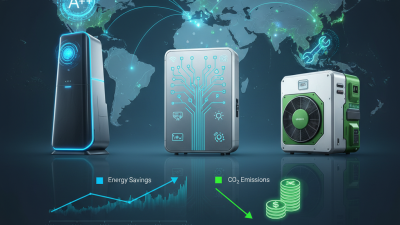
China Top 10 Heat Pump Technology Manufacturers
China’s heat pump industry is expanding across homes, commercial buildings, and industrial sites. Its manufacturers vary widely in scale, product range, and international reach. This guide introduces ten companies active in heat pump technology and explains what distinguishes their offerings.
The comparison considers practical details: product types, stated performance, manufacturing capabilities, certifications, and support for overseas customers. It also looks at how companies address different climates and installation needs. A compact outdoor unit beside a townhouse, for example, faces different demands from a large system serving a hotel. Details matter.
International Energy Agency Executive Director Dr. Fatih Birol has described heat pumps as “a key technology for the clean energy transition.” That perspective explains why product quality and reliable performance deserve close attention, not just sales figures. Still, a manufacturer’s published specifications do not guarantee results at every site. Installation, maintenance, and local conditions can change real-world performance.
This list is a starting point, not a final verdict. Company rankings can shift as products, service networks, and independent evidence change. Some comparisons remain imperfect, especially when manufacturers disclose different levels of technical detail. Readers should verify current specifications and service availability before making purchasing decisions. The aim is a useful overview of China’s leading manufacturers, grounded in observable factors rather than broad claims.
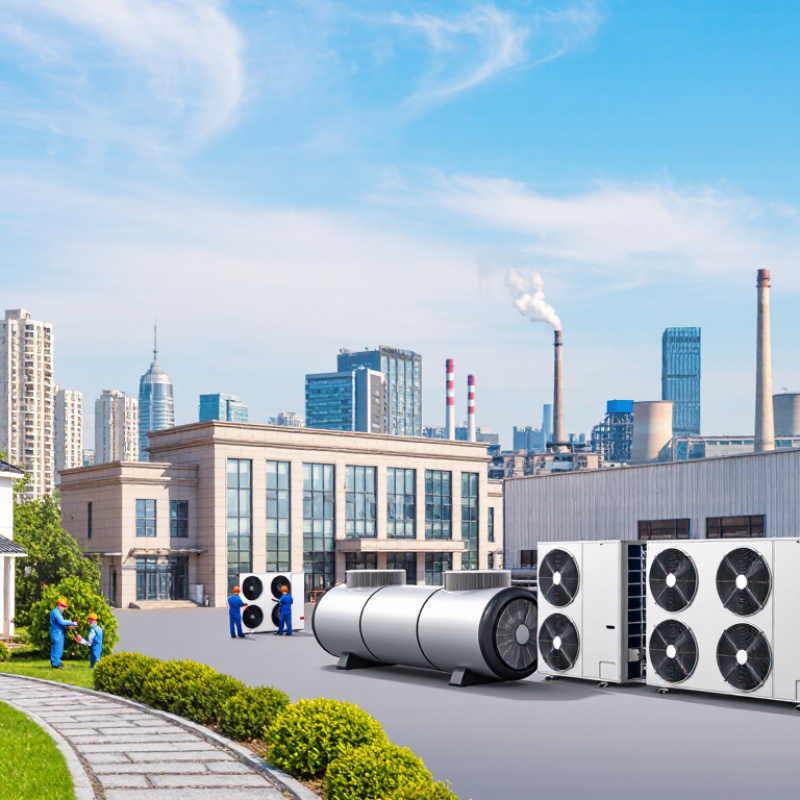
Heat Pump Technology and Its Role in China’s Energy Sector
Heat pumps are reshaping how buildings and industries use energy in China. They move heat instead of producing it through direct combustion, using electricity to transfer warmth from outdoor air, water, or the ground. In a residential building, an air-source unit may provide heating and hot water through the same system. The practical benefit depends on the local climate, equipment design, and how well the building is insulated.
Details matter. During a cold spell, an air-source system may need defrost cycles, which can affect comfort and efficiency. Ground-source systems offer steadier temperatures but require suitable land and careful installation. In factories, heat pumps can recover warmth from wastewater or exhaust streams for lower-temperature processes. These applications can reduce fuel use, but results vary with operating hours, maintenance, and the electricity mix. A poorly sized unit may cycle too often or struggle to meet demand. Not every site is a good fit. China’s energy transition will depend not only on wider adoption, but also on trained installers, reliable performance data, and honest comparisons with other heating options. The gap between a design estimate and real-world operation still deserves attention.
Criteria for Identifying Leading Chinese Heat Pump Manufacturers
China’s leading heat-pump manufacturers should be assessed by verified performance, not factory size or export claims alone. Compare seasonal efficiency and heating capacity under recognised test conditions, including low outdoor temperatures. Ask for independent laboratory reports, test methods, and results at specific operating points.
The IEA’s 2024 market update reported that global heat-pump sales fell about 3% in 2023, while sales in China rose roughly 12%. That growth makes careful supplier assessment more important. Numbers need context.
For cold-climate projects, check capacity near −15°C, defrost behaviour, noise levels, and seasonal performance—not just the headline COP. Confirm that test data comes from a laboratory accredited to ISO/IEC 17025, and review applicable standards such as EN 14511 and EN 14825.
Ask manufacturers for field records, warranty terms, spare-parts lead times, and service coverage in the destination market. A polished brochure is not proof.
Even strong laboratory results may not predict performance in a poorly insulated home or during frequent defrost cycles. Factory audits and traceable component records can reveal useful details, but they should support—not replace—independent testing and real-world operating data.
Profiles of China’s Top 10 Heat Pump Technology Manufacturers
These profiles examine ten Chinese heat pump manufacturers through their engineering choices, production focus, and support capabilities, rather than relying on promotional claims. Some concentrate on residential air-to-water systems; others serve commercial buildings or industrial processes. Useful distinctions include operating temperature range, capacity options, compressor control, and performance in cold weather. Ask for test results at stated outdoor and water temperatures. A single efficiency figure can hide important conditions.
Manufacturing scale matters, but so do component sourcing, quality checks, and access to trained service technicians. Look for clear installation guidance and spare-parts arrangements. Where available, compare sound measurements, defrost behavior, and control options for different building loads. These details affect daily use. Not every published comparison is complete, and product specifications may vary by model or market. That deserves scrutiny.
Tips: Match the unit to the building’s heat loss and existing emitters. Check performance at your local winter design temperature, not just a mild test point. Request written data and confirm what the warranty covers. Ask about service response times before choosing.
Product Categories, Core Technologies, and Manufacturing Capabilities
China Top 10 Heat Pump Technology Manufacturers
Product Categories, Core Technologies, and Manufacturing Capabilities
A useful comparison starts with product fit, not factory size. Chinese manufacturers serve residential air-to-water and air-to-air systems, commercial hot-water applications, and larger industrial heating projects. Ground-source and water-source units also appear in the market, though installation conditions limit where they make sense. Different jobs need different designs.
Core technologies include inverter-driven compressors, electronic expansion valves, optimized heat exchangers, and controls that manage defrosting in cold weather. For higher outlet temperatures, manufacturers may use vapor injection or cascade configurations. These features matter only when supported by testing. The International Energy Agency’s 2022 report, The Future of Heat Pumps, says global heat pump sales grew nearly 15% in 2021, with growth across China, Europe, and North America. That market signal makes manufacturing consistency important: look for climate-chamber testing, refrigerant leak checks, production traceability, and verified performance data. A neat specification sheet is not a field test.
Top-ten comparisons should therefore assess category coverage, engineering depth, and repeatable quality, rather than output volume alone. Ask how a unit performs at low outdoor temperatures, and whether its rated capacity matches the intended installation. There is room for caution. Published ratings cannot capture every site condition, and buyers may overlook servicing access or control compatibility. A factory’s real capability shows in the details: stable brazed joints, calibrated sensors, and documented end-of-line checks.
Applications, Industry Standards, and Market Developments
China’s heat-pump manufacturers serve homes, hotels, schools, and industrial sites. Typical systems provide space heating and hot water; larger units can support low-temperature process heat. In a cold-climate installation, performance depends on more than the outdoor unit. Pipe insulation, defrost cycles, and correctly sized emitters matter. Small details count.
China’s GB 55015-2021 sets building energy-efficiency requirements, while GB/T 25127.1-2020 addresses low-ambient air-source heat-pump water-chilling and heating packages. Project teams should check which standards apply to each product and installation. Nameplate efficiency is not field efficiency.
The International Energy Agency’s 2022 report, The Future of Heat Pumps, estimates that heat pumps could cut global carbon dioxide emissions by at least 500 million tonnes in 2030 under its Announced Pledges Scenario. That outlook supports market growth, but results depend on electricity supply and real-world operation.
Manufacturers are developing inverter controls, cold-weather performance, and system integration. Yet smart controls cannot fix poor commissioning. Installation quality remains uneven, and that deserves more attention.