
What Types of Heat Pumps Are There?
Choosing among heat pumps starts with a simple question: where will the system collect heat? Air-source models draw energy from outdoor air, while ground-source systems use heat stored in the soil. Some designs exchange heat with a nearby water source. The name can sound technical, but the basic idea is practical: move heat rather than create it by burning fuel. The details matter.
There are also differences in how systems deliver warmth. Ducted units connect to existing air ducts; ductless models can serve individual rooms. Hybrid systems pair a heat pump with another heater, which may help in colder conditions. These categories can overlap, so labels alone do not reveal how a unit will perform in a particular home. A drafty house with old radiators presents different challenges from a well-insulated home with underfloor heating. Not every option fits.
This guide explains the main types of heat pumps, how they work, and what trade-offs homeowners may encounter. Climate, insulation, installation space, electricity costs, and the condition of existing equipment all affect the decision. Published efficiency figures are useful, but they do not guarantee identical results in every building. A qualified installer can assess the home, check equipment specifications, and estimate likely operating costs. Even then, estimates involve assumptions. Comparing options carefully—and asking what those assumptions mean—can make the choice clearer.
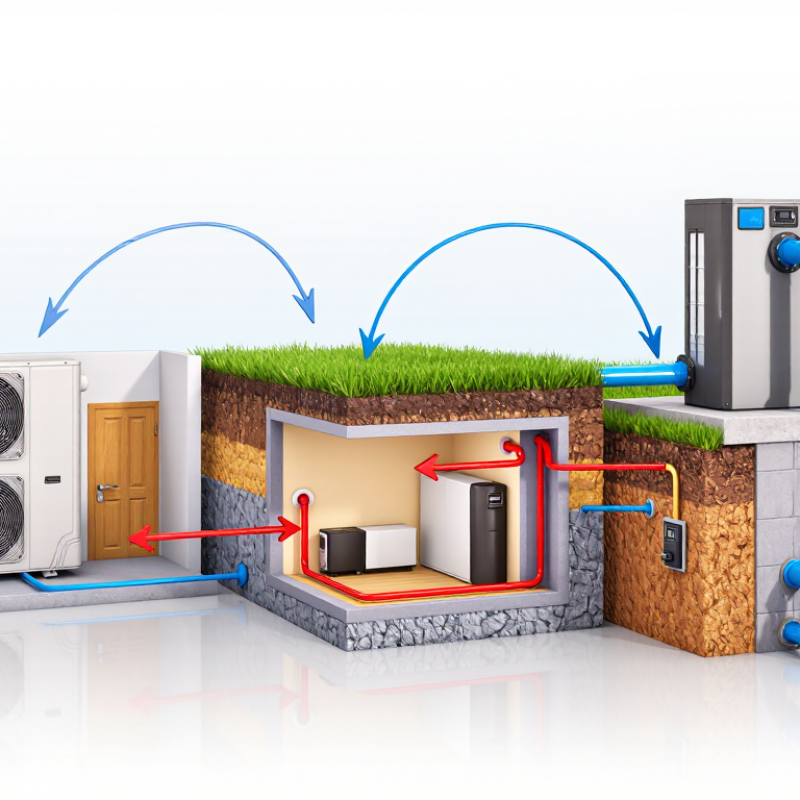
Table of Contents
[Hide]
How Heat Pumps Are Classified by Their Heat Sources
What Types of Heat Pumps Are There?
Heat pumps are classified by where they collect heat: outdoor air, the ground, water, or indoor exhaust air. Air-source units draw energy from outside air and move it indoors. Air is everywhere. Their output can fall during very cold weather, so local winter temperatures matter. Ground-source systems use buried pipes to exchange heat with relatively stable soil temperatures. Water-source systems draw heat from a suitable lake, well, or other water body.
The U.S. Department of Energy reports that geothermal heat pumps can use 30%–60% less energy than conventional heating systems, though actual savings depend on the site and equipment. That range is useful, not a promise. Ground loops need space and careful installation; water-source designs also depend on reliable water access. Exhaust-air heat pumps recover warmth from ventilation air, often in tightly sealed buildings. Their performance depends partly on how much warm indoor air is available.
The International Energy Agency’s 2022 report, The Future of Heat Pumps, estimates that heat pumps supplied about 10% of global building heat demand in 2021. That figure covers different technologies and regions, so it does not predict one home’s results. Cold changes the picture. When comparing systems, check the heat source, winter design temperature, and available land or water. Classification helps, but real buildings rarely fit a perfect diagram.
What Types of Heat Pumps Are There? — How Heat Pumps Are Classified by Their Heat Sources
| Heat-source type | Where the heat comes from | Common system configurations | Typical uses | Key benefits | Important considerations |
|---|---|---|---|---|---|
| Air-source | Outdoor air. The unit transfers heat between outdoor air and indoor air or a water-based heating system. | Air-to-air; air-to-water | Space heating and cooling; some systems can also heat domestic hot water. | Usually simpler to install than systems that require underground loops or a nearby water source; suitable for many building types. | Heating output and efficiency generally decrease as outdoor temperatures fall. Performance depends on climate, equipment design, and installation. |
| Ground-source (geothermal) | Heat stored in the ground, accessed through buried pipes known as ground loops. | Closed-loop horizontal or vertical systems; open-loop systems where local conditions and regulations permit. | Space heating and cooling, and sometimes domestic hot water, for homes and larger buildings. | Ground temperatures are generally more stable than outdoor air temperatures, which can support steady operation throughout the year. | Ground-loop installation can involve substantial excavation or drilling, site planning, and higher upfront costs. |
| Water-source | Heat from water, such as a lake, river, well, or a building’s water loop. | Closed-loop or open-loop arrangements, depending on the water source and system design. | Buildings with access to a suitable water body, well, or shared water-loop system. | Water can provide a relatively stable heat source when the supply is suitable and consistently available. | Feasibility depends on water availability, temperature, flow, water quality, permits, and environmental requirements. |
| Exhaust-air | Heat recovered from warm, used indoor air being removed by a ventilation system. | Ventilation heat-recovery heat pumps, often integrated with mechanical ventilation and hot-water systems. | Well-insulated buildings with mechanical ventilation and a steady supply of extract air. | Recovers some heat that would otherwise leave the building through ventilation. | The available heat is limited by the amount and temperature of exhaust air, so system capacity and building ventilation design matter. |
Classification note: Air-source, ground-source, and water-source describe the main heat reservoirs. Exhaust-air heat pumps are a specialized type that recovers heat from ventilation air. Solar energy may supplement a heat-pump system, but solar-assisted systems are generally hybrid arrangements rather than a separate primary heat-source category.
Related Posts
-
Top 10 Tips for Choosing an Electric Heat Pump Today?
-

China Top 10 Heat Pump Technology Manufacturers
-
How to Choose the Best Heat Pump Options?
-
Heat Pumps for Dummies A Guide to Choosing the Best Option?
-
How to Choose Heat Pumps for Dummies?
-
How to Choose the Best High Efficiency Heat Pump for Your Home
